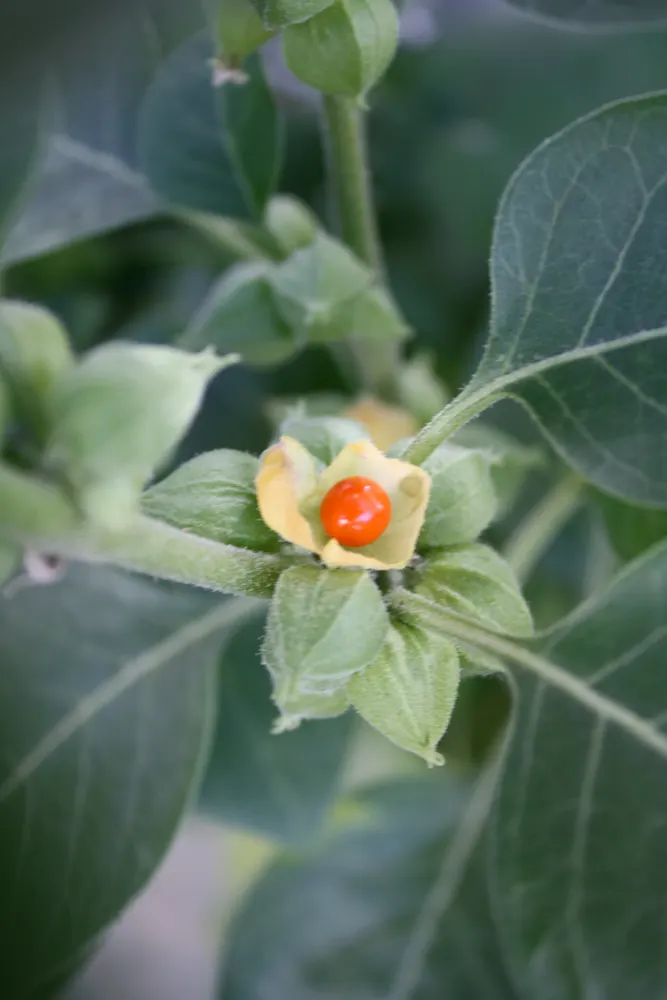
Photo: Wowbobwow12, CC BY-SA 3.0 (via Wikimedia Commons)
Ashwagandha
Withania somnifera
Also known as Indian Ginseng, Winter Cherry, Poison Gooseberry
Key benefits
✦Traditional uses
✦In Ayurvedic medicine, the dried root of ashwagandha has been used for thousands of years as a rasayana, a rejuvenating tonic meant to restore strength and steady the body through long seasons of strain. Traditional healers reached for it after illness, exhaustion, or difficult childbirth, believing it helped the body recover its footing. The plant's Sanskrit name, meaning smell of horse, points to both its pungent root and the old belief that it could lend the vigor of a horse to whoever took it. It traveled from household gardens into formal Ayurvedic texts as one of the most trusted tonic herbs in that tradition.
Growing guide
✦Fresh to dried
✦Traditional preparations
✦Ashwagandha Root Decoction
A gentle, traditional way to take the root, simmered rather than simply steeped since roots need more coaxing than leaves or flowers to release their properties.
How it's made. Traditionally, 1 teaspoon of dried, chopped ashwagandha root is simmered gently in 1 cup of water for about 10 to 15 minutes, then strained and sipped warm, often once daily.
Warm Ashwagandha Milk
Known in India as ashwagandha doodh, a comforting evening drink built on the classic golden milk tradition, taken in the hours before bed.
How it's made. Traditionally, a scant 1/4 teaspoon of ashwagandha root powder is stirred into 1 cup of warm milk (dairy or a plant milk), sometimes with a pinch of cinnamon or a touch of honey, and sipped slowly in the evening.
- ✦Tulsi (Holy Basil)
- ✦Turmeric
- ✦Cinnamon
- ✦Eleuthero
- ✦Reishi
“For the long, wearing season, when the body is asking to be steadied rather than sped up.”
Ashwagandha's small orange-red berries are wrapped in a papery husk that looks remarkably like a tiny lantern, which is why the plant earned the folk name winter cherry even though it is not related to true cherries at all.
Ashwagandha is traditionally avoided during pregnancy due to its uterine-stimulating effects and isn't recommended for infants or young children. It can also interact with thyroid medication, sedatives, blood sugar medication, and immunosuppressants.