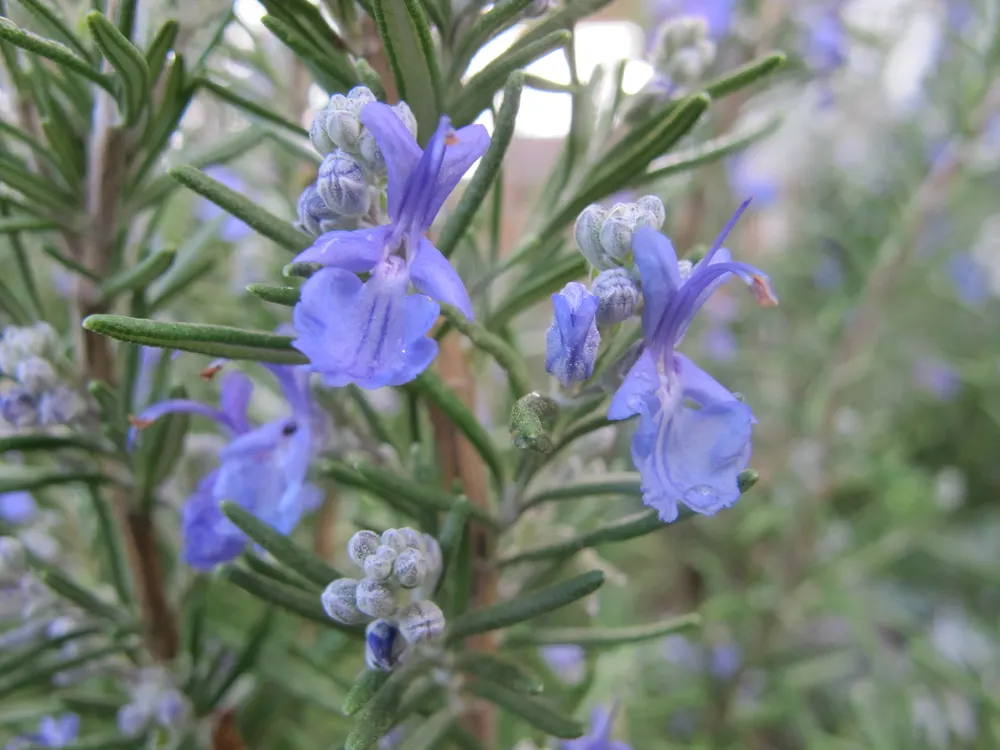
Photo: Margalob, CC BY-SA 4.0 (via Wikimedia Commons)
Rosemary
Rosmarinus officinalis
Also known as Dew of the Sea, Anthos, Compass Weed, Old Man
Key benefits
✦Traditional uses
✦Rosemary has been burned, brewed, and braided into daily life around the Mediterranean for thousands of years, prized as much for the mind as for the plate. Ancient Greek scholars are said to have twined sprigs into their hair while studying, trusting the sharp scent to steady their memory, and the herb carried that reputation for centuries afterward, right into Shakespeare's line about rosemary for remembrance. Cooks have leaned on it just as long, working the resinous leaves into roasted meats, breads, and oils across Italy, France, and Spain, while traditional herbalists brewed it as a warming after-dinner tea to settle the stomach and lift a heavy mood. Brides once wore rosemary wreaths and mourners tucked sprigs into caskets, the same plant standing for love, loyalty, and remembering, all at once.
How to grow & use it
✦The full apothecary for Rosemary
Traditional remedies and step-by-step preparations, a complete growing guide, and how to harvest, dry, and store it, all unlocked with HerbLens Unlimited.
- ✦Remedies & preparations
- ✦ Growing guide
- ✦Harvest & storage
From under $6 a month. Free plant identifications always included.
- ✦Thyme
- ✦Sage
- ✦Lavender
- ✦Thyme
- ✦Sage
“When your kitchen and your thoughts both need sharpening, reach for the sea dew herb.”
The name rosemary comes from the Latin ros marinus, meaning dew of the sea, a nod to the way the shrub thrives on windswept Mediterranean cliffs where little else survives, drinking in salt mist instead of rain.
Rosemary is safe in normal cooking amounts. Concentrated rosemary oil should never be taken internally or applied undiluted, since it can irritate skin and may trigger seizures in people prone to them, and medicinal-strength rosemary is best avoided in pregnancy and by anyone on blood thinners, blood pressure, or diabetes medication.