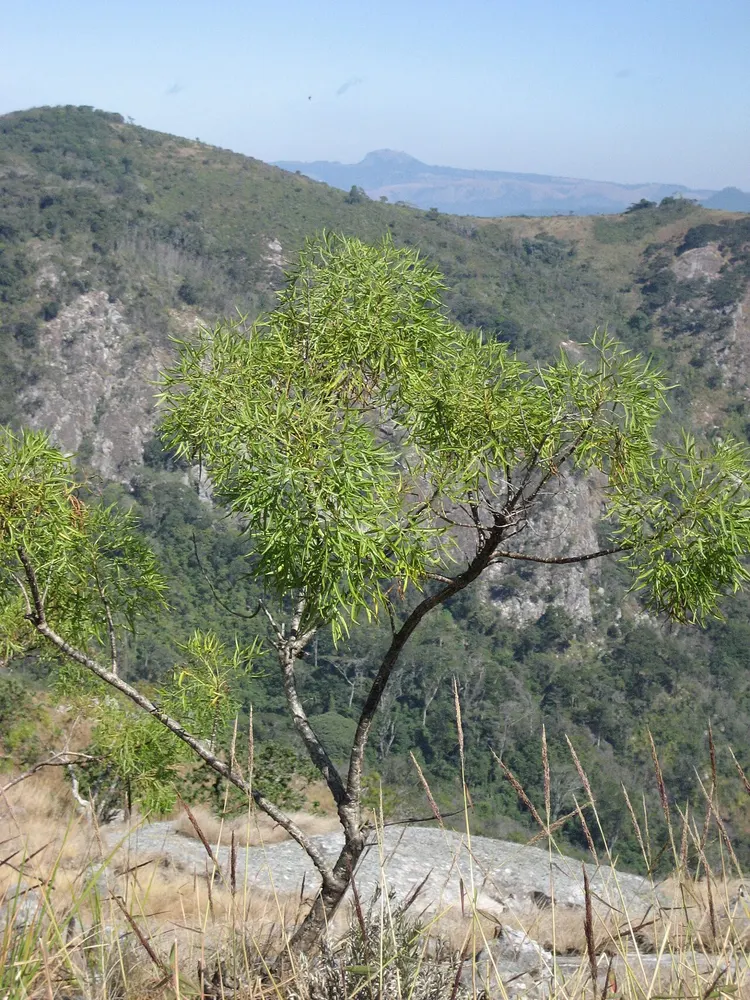
Photo: Ton Rulkens from Mozambique, CC BY-SA 2.0 (via Wikimedia Commons)
Parsley Tree
Heteromorpha arborescens
Also known as Wild Parsley Tree, Perdepis
Key benefits
✦Traditional uses
✦Long before it had a Latin name, the parsley tree was known to traditional healers throughout its African range, who turned to the bark and root for stomach and digestive complaints. Its common name comes from the crushed leaves, which release a sharp, green scent almost identical to garden parsley, a quiet reminder that this modest African tree and the herb in your kitchen garden share the same family tree. In the bushveld and wooded hillsides where it grows, it has also long been recognized as a favorite browse for kudu and other antelope, and its curling, papery bark makes it easy to identify even from a distance. Much of its traditional medicinal knowledge still lives with local healers rather than in written herbals, so it remains more a plant of oral tradition than of the modern apothecary shelf.
How to grow & use it
✦The full apothecary for Parsley Tree
Traditional remedies and step-by-step preparations, a complete growing guide, and how to harvest, dry, and store it, all unlocked with HerbLens Unlimited.
- ✦Remedies & preparations
- ✦ Growing guide
- ✦Harvest & storage
From under $6 a month. Free plant identifications always included.
“For the tree whose leaves smell like a garden herb but whose roots carry generations of quiet, oral healing knowledge.”
Crush a leaf of the parsley tree between your fingers and you will catch the same green, herby scent as the parsley in a kitchen garden, a fitting coincidence for a distant cousin in the same botanical family, and exactly how this African tree earned its common name.
Traditional healers in Africa use the root and bark, but safe dosing and interactions haven't been well studied, so it shouldn't be self-prescribed. Avoid it during pregnancy and breastfeeding.