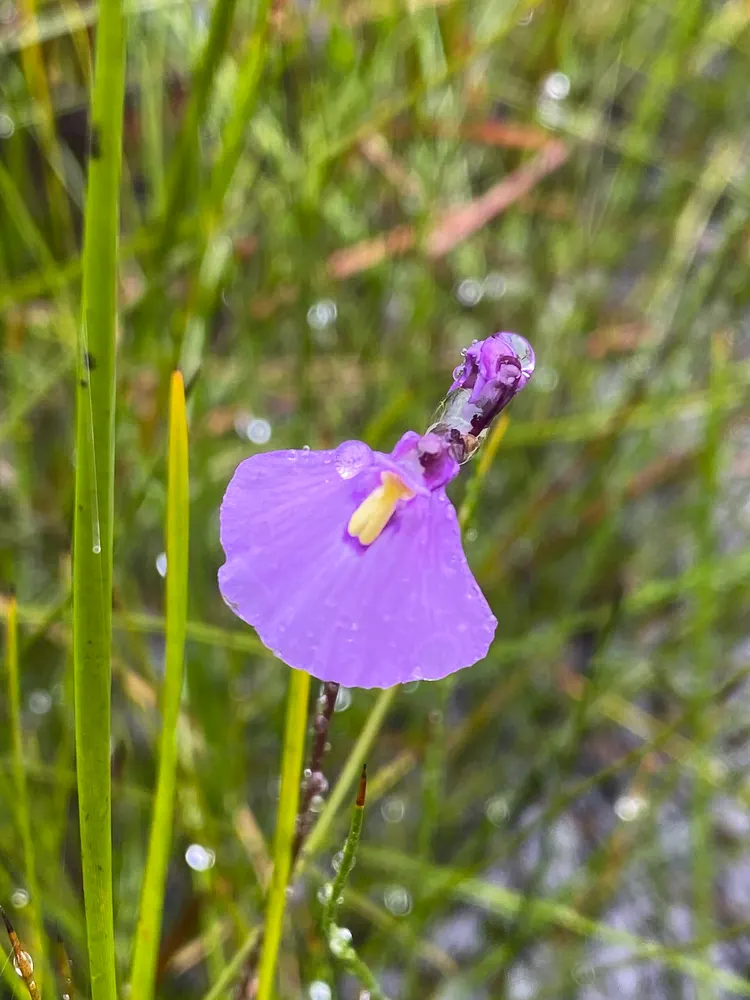
Photo: Allthingsnative, CC BY-SA 4.0 (via Wikimedia Commons)
Fairy Aprons
Utricularia dichotoma
Also known as Fairy Apron, Forked Bladderwort, Common Bladderwort
Key benefits
✦Traditional uses
✦Fairy Aprons has never been a plant of the pharmacy or the kitchen pot. Its story belongs to the wetlands of Australia and New Zealand, where it quietly performs one of the plant kingdom's more astonishing tricks, drawing in and digesting tiny aquatic creatures inside bladders too small and too fast for the eye to easily catch in the act. Nineteenth century naturalists exploring the Australian bush were charmed by its little mauve flowers rising above the waterline, shaped enough like a row of tiny pinafores or aprons to earn the plant its common name. Its fame today rests with botanists, pond keepers, and carnivorous plant enthusiasts rather than herbalists, treasured as a living demonstration of a flower that is also a hunter.
How to grow & use it
✦The full apothecary for Fairy Aprons
Traditional remedies and step-by-step preparations, a complete growing guide, and how to harvest, dry, and store it, all unlocked with HerbLens Unlimited.
- ✦Remedies & preparations
- ✦ Growing guide
- ✦Harvest & storage
From under $6 a month. Free plant identifications always included.
- ✦Sundew (Drosera species)
- ✦Venus flytrap
- ✦Native sedges and rushes
- ✦Other small bladderworts, such as Utricularia gibba, for a similar look in bog gardens and ponds
“When you want your bog garden to do something no ordinary bed can, bloom sweetly on the surface while it hunts quietly below.”
Fairy Aprons belongs to the bladderwort genus Utricularia, whose underwater traps are widely considered among the fastest movements in the entire plant kingdom, snapping shut in a fraction of a millisecond to engulf water fleas and mosquito larvae before they have any chance to swim away.
Not toxic to the touch, but it has no food or medicinal use and is protected in parts of its native range, so buy from a specialist nursery rather than collecting it in the wild.