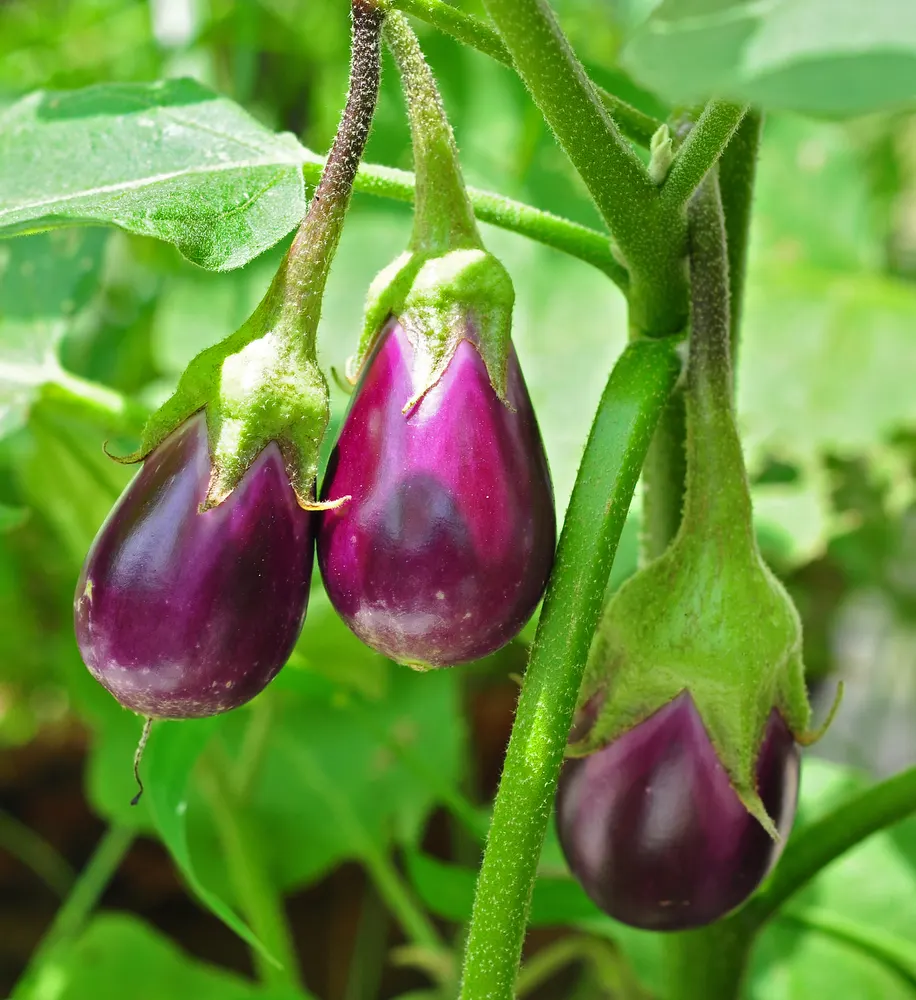
Photo: Joydeep, CC BY-SA 3.0 (via Wikimedia Commons)
Eggplant
Solanum melongena
Also known as Aubergine, Brinjal, Mad Apple, Guinea Squash
Key benefits
✦Traditional uses
✦Eggplant has been cultivated in India for well over a thousand years, and traders carried it west through Persia and the Arab world until it took root in Mediterranean and African kitchens. In traditional Chinese and Ayurvedic medicine, eggplant and its skin have long been valued as part of the daily diet, believed to support healthy digestion and circulation when eaten regularly. Folk cooks across many cultures also prized the deep purple skin itself, the part now known to hold the antioxidant nasunin, and made a point of cooking the vegetable unpeeled. Even its old English nickname, the mad apple, hints at how much suspicion and fascination this humble nightshade once stirred before it became a kitchen staple.
How to grow & use it
✦The full apothecary for Eggplant
Traditional remedies and step-by-step preparations, a complete growing guide, and how to harvest, dry, and store it, all unlocked with HerbLens Unlimited.
- ✦Remedies & preparations
- ✦ Growing guide
- ✦Harvest & storage
From under $6 a month. Free plant identifications always included.
- ✦Garlic
- ✦Basil
- ✦Cumin
- ✦Zucchini
- ✦Portobello mushroom
“When the skin gleams like a polished jewel and is ready to drink up whatever smoke or spice you offer it.”
Botanically, eggplant is a berry, and it belongs to the very same nightshade family as the tomato and the potato, its two most famous garden cousins.
The ripe fruit is safe and nourishing once cooked, though raw eggplant is bitter and hard to digest. The leaves, stems, and flowers contain solanine and should never be eaten.