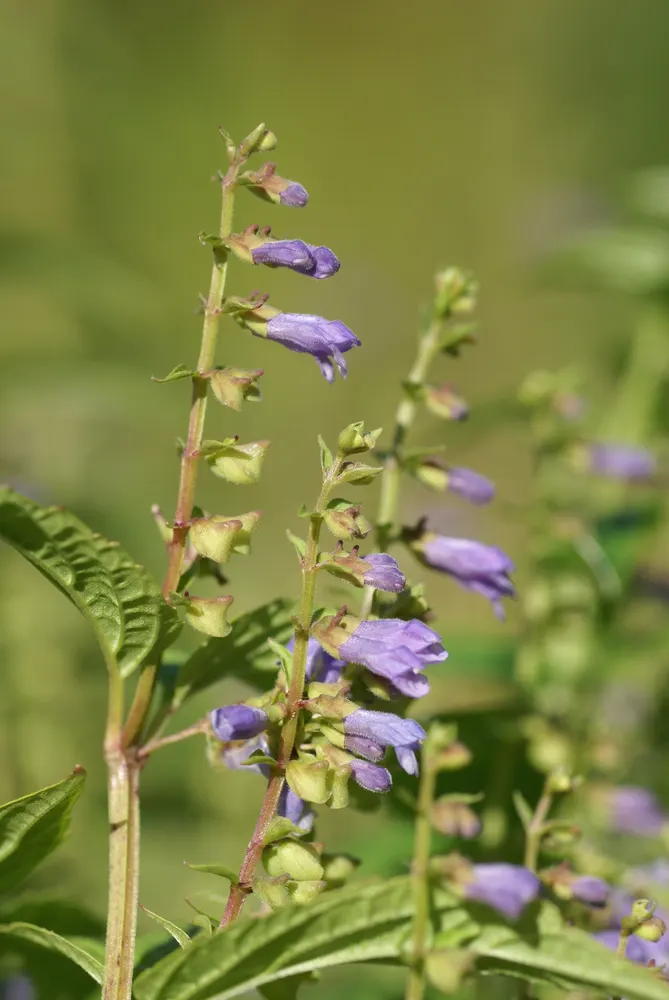
Photo: Rolf Engstrand, CC BY-SA 3.0 (via Wikimedia Commons)
Mad Dog Skullcap
Scutellaria lateriflora
Also known as Skullcap, Blue Skullcap, Hoodwort, Helmet Flower
Key benefits
✦Traditional uses
✦Skullcap grows quietly at the edges of ponds and wet meadows, its tiny blue helmet-shaped flowers easy to miss until you know to look for them. Cherokee and other Indigenous healers used it as a women's herb and a calming nervine long before European settlers arrived, and by the 1800s it had become a staple of American eclectic medicine, prescribed for restlessness, nervous exhaustion, and what old herbals called "the fidgets." Its unsettling common name, mad dog skullcap, comes from an 18th-century belief that it could treat rabies, a use later abandoned, though the calming reputation endured and only grew stronger. Generations of herbalists have since reached for it as one of the gentler nervines in the garden, a plant to steep at the end of a long day.
How to grow & use it
✦The full apothecary for Mad Dog Skullcap
Traditional remedies and step-by-step preparations, a complete growing guide, and how to harvest, dry, and store it, all unlocked with HerbLens Unlimited.
- ✦Remedies & preparations
- ✦ Growing guide
- ✦Harvest & storage
From under $6 a month. Free plant identifications always included.
- ✦Chamomile
- ✦Lemon Balm
- ✦Passionflower
- ✦Passionflower
- ✦Lemon Balm
“For the evenings when your thoughts won't quite lie down and rest.”
The plant's small flower has a curious bump on its upper lip that early botanists thought resembled a tiny medieval helmet, or skull cap, which is how this humble wetland mint got its name.
Skullcap has occasionally been adulterated with germander, a lookalike herb that can cause liver injury, so buy from a reputable supplier. Its calming effect can add to sedatives, sleep aids, or alcohol, and it is not established as safe in pregnancy or breastfeeding.