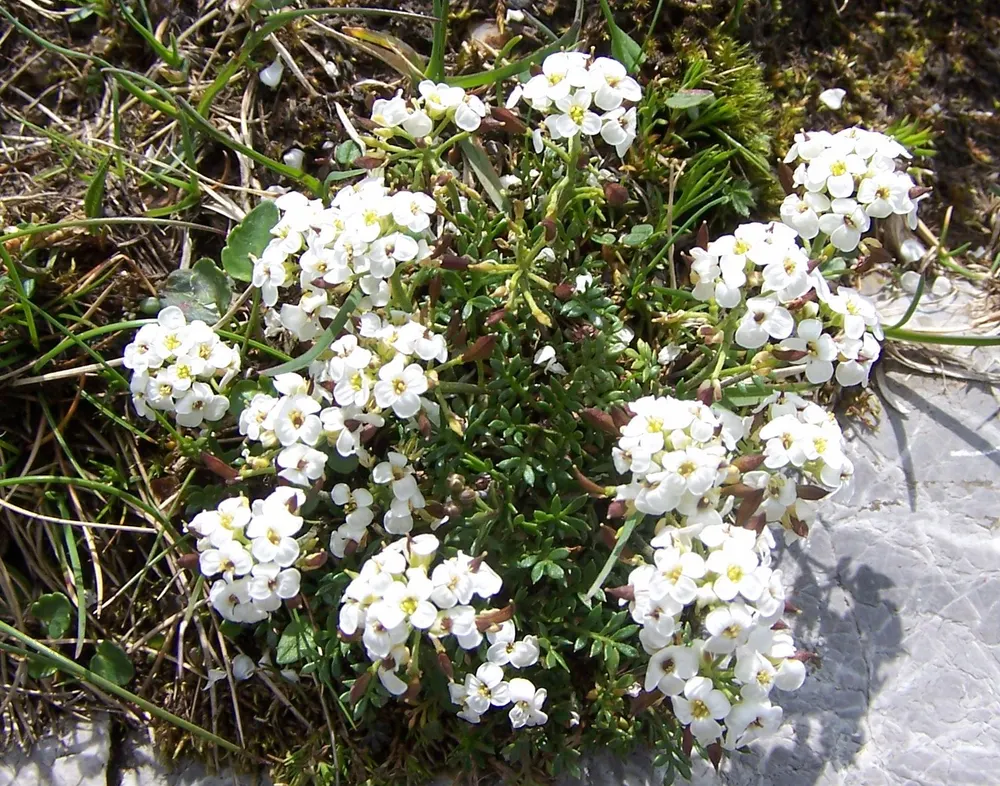
Photo: Jerzy Opioła, CC BY-SA 3.0 (via Wikimedia Commons)
Alpine Hutchinsia
Hutchinsia alpina
Also known as Chamois cress, Pritzelago alpina, Hornungia alpina, Noccaea alpina, Alpine chamois cress
Key benefits
✦Traditional uses
✦Alpine hutchinsia has never been a kitchen or medicine chest herb. Its real story belongs to the mountains, where it clings to scree and limestone crevices from the Alps to the Pyrenees and Carpathians, often growing where almost nothing else will take hold. Alpine botanists and rock gardeners have prized it since the Victorian era for exactly that toughness, tucking it into troughs and scree beds to bring a scrap of high-altitude wildness down to garden level. Its charm has always been ornamental and botanical rather than culinary or medicinal.
How to grow & use it
✦The full apothecary for Alpine Hutchinsia
Traditional remedies and step-by-step preparations, a complete growing guide, and how to harvest, dry, and store it, all unlocked with HerbLens Unlimited.
- ✦Remedies & preparations
- ✦ Growing guide
- ✦Harvest & storage
From under $6 a month. Free plant identifications always included.
- ✦Saxifrage
- ✦Alpine sedum
- ✦Gentian
- ✦Rock cress (Arabis)
- ✦Draba
“For the gardener who wants a scrap of high mountain scree, dotted with tiny white stars, tucked right into a trough at home.”
The genus name Hutchinsia honors Ellen Hutchins, an early nineteenth century Irish botanist who became one of the most skilled cryptogam collectors of her day despite lifelong poor health, and whose careful specimens earned her the respect of the leading botanists of the era.
Alpine hutchinsia has no documented toxicity and no history as a food herb, and it can be confused with other small white-flowered mustards in the wild, so it's not one to forage for the table.