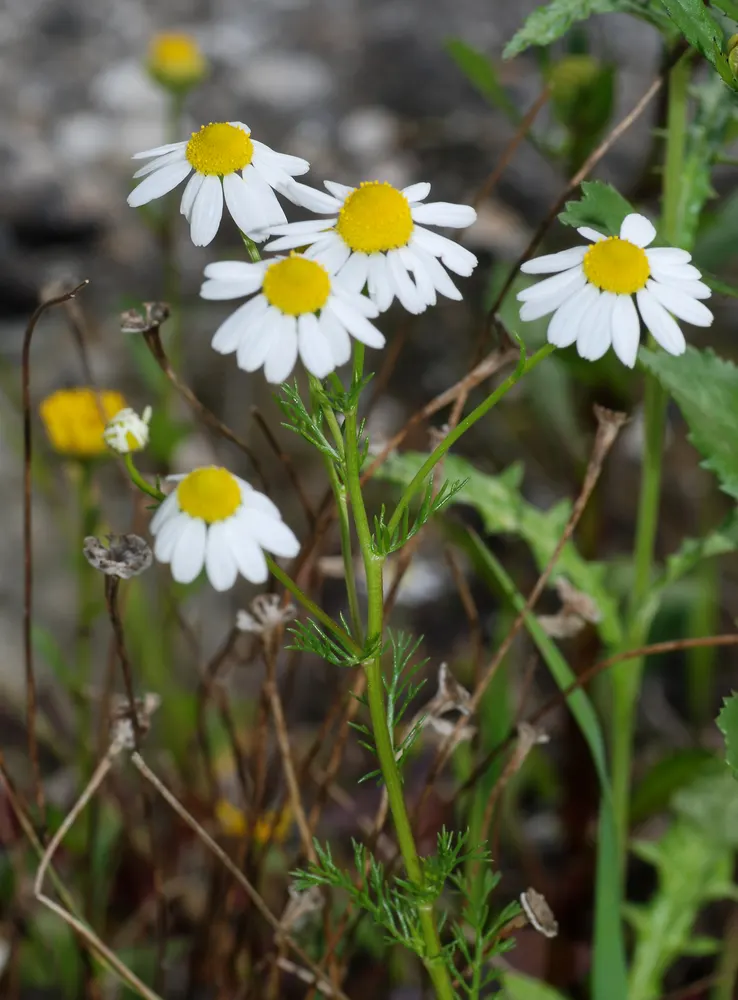
Photo: Alvesgaspar, CC BY-SA 3.0 (via Wikimedia Commons)
German Chamomile
Matricaria chamomilla
Also known as Wild Chamomile, Scented Mayweed
Key benefits
✦Traditional uses
✦Few herbs feel as gentle as chamomile. Its small, apple-scented flowers have been brewed into bedtime tea for centuries across Europe, valued for softening tension, quieting a restless stomach, and coaxing the body toward sleep. The same flowers turn up in skin rinses and compresses, where their calming reputation follows them from the teacup to the bath.
How to grow & use it
✦The full apothecary for German Chamomile
Traditional remedies and step-by-step preparations, a complete growing guide, and how to harvest, dry, and store it, all unlocked with HerbLens Unlimited.
- ✦Remedies & preparations
- ✦ Growing guide
- ✦Harvest & storage
From under $6 a month. Free plant identifications always included.
- ✦Lavender
- ✦Lemon Balm
- ✦Valerian
- ✦Lemon Balm
- ✦Linden
“When the mind is busy and sleep feels just out of reach.”
In Beatrix Potter's tale, Peter Rabbit's mother put him to bed with a dose of chamomile tea, a nod to how deeply the herb is woven into folk bedtime tradition.
People allergic to ragweed, daisies, or marigolds may react to chamomile. It can add to the effect of sedatives, so caution is warranted before surgery.