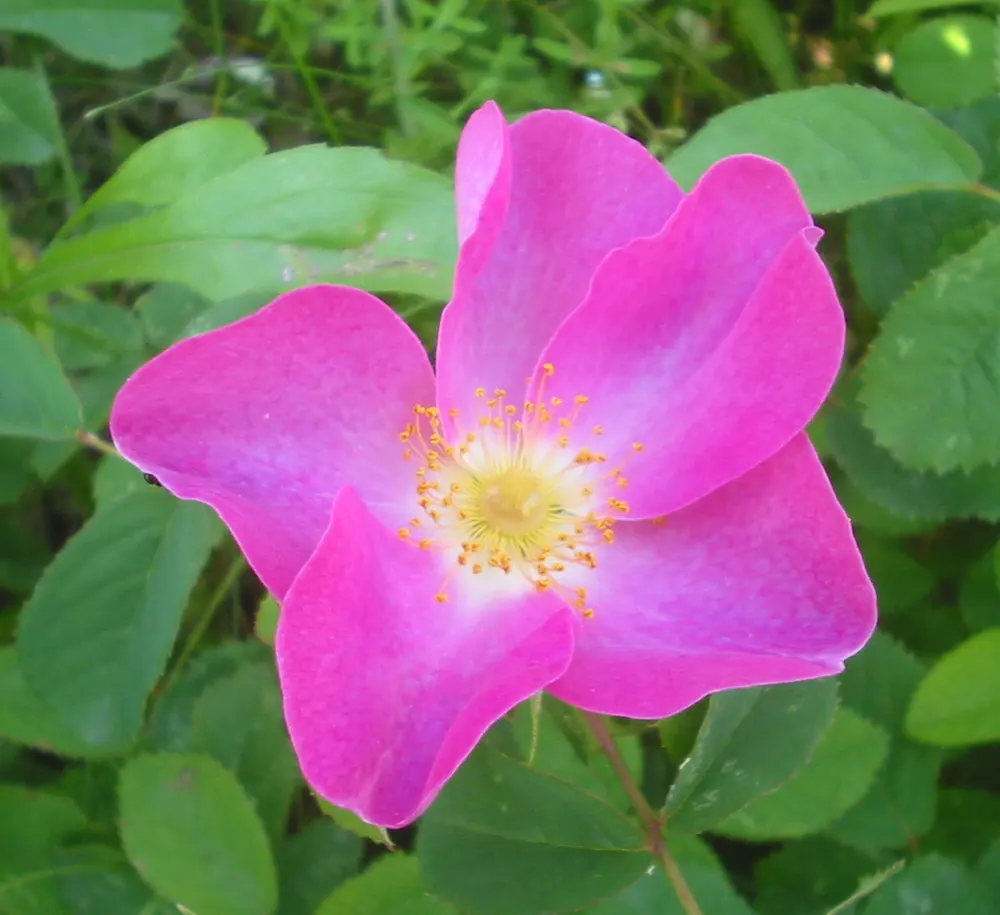
Photo: CC BY-SA 3.0 (via Wikimedia Commons)
Apothecary's Rose
Rosa gallica
Also known as French Rose, Rose of Provins, Gallic Rose, Red Rose of Lancaster
Key benefits
✦Traditional uses
✦Rosa gallica is thought to be the oldest garden rose in Europe, prized long before the damask and tea roses arrived from the East. Its deeply perfumed, deep pink to crimson petals made it the workhorse of the medieval apothecary, dried by the sackful in the French town of Provins and shipped across the continent as conserve of roses, rose water, and rose honey. Herbalists reached for it as a gentle astringent for the skin and throat, and as a comforting flower to ease a heavy heart or an unsettled stomach. It also became deeply symbolic, carried home from the Crusades and later claimed as the red rose of the House of Lancaster.
Growing guide
✦Fresh to dried
✦Traditional preparations
✦Rose Petal Tea
A softly fragrant, rosy infusion traditionally sipped to soothe the stomach and calm frayed nerves.
How it's made. Steep 1 tablespoon of dried Rosa gallica petals in 250 ml of just-boiled water, covered, for 8 to 10 minutes, then strain.
Rose Petal Toner
A simple rose water traditionally patted onto the skin to refresh and tone.
How it's made. Steep 2 tablespoons of dried petals in 500 ml of just-boiled water for 20 minutes, strain, cool, and store in the refrigerator for up to a week.
- ✦Chamomile
- ✦Lavender
- ✦Hibiscus
- ✦Rosa damascena (damask rose)
- ✦Rosa canina (dog rose, for the hips)
“When you want comfort that smells like an old garden after rain.”
The town of Provins in France became so famous for growing and drying Rosa gallica that the flower earned the name Rose of Provins, and by the Middle Ages the town's apothecaries were shipping rose conserve and rose sugar across Europe.
This rose has a long history of gentle culinary and cosmetic use, but anyone allergic to roses or other Rosaceae plants, like apples or strawberries, should avoid it, and only petals or hips grown without pesticides should be used.