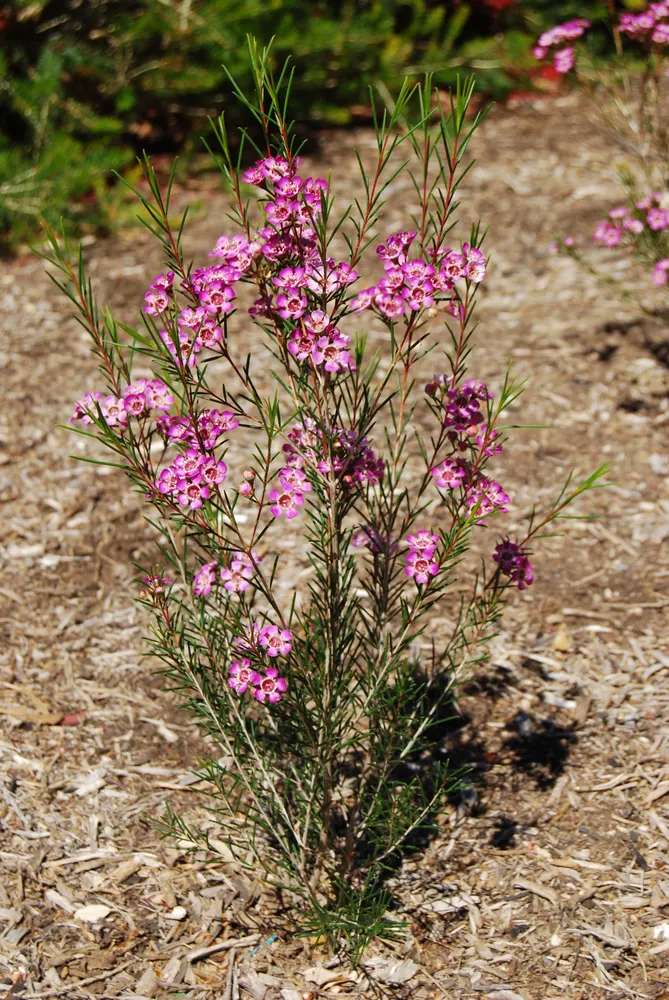
Photo: Peripitus, CC BY-SA 3.0 (via Wikimedia Commons)
Geraldton Wax
Chamelaucium uncinatum
Also known as Geraldton Wax, Geraldton Waxflower, Wax Flower, Chamelaucium
Key benefits
✦Traditional uses
✦Geraldton wax grows wild along the sandy coastal heaths near Geraldton in Western Australia, where its wiry, drought-hardened branches have weathered salt wind and lean soil for countless generations. It was never a plant of the medicine chest, but rather one prized by growers and florists once the cut-flower trade discovered what bush walkers already knew, that its small waxy blossoms hold their color and form for weeks after cutting. Today it is one of Australia's most successful floral exports, grown around the world for the same quality that first made it useful at home, an almost stubborn refusal to wilt.
How to grow & use it
✦The full apothecary for Geraldton Wax
Traditional remedies and step-by-step preparations, a complete growing guide, and how to harvest, dry, and store it, all unlocked with HerbLens Unlimited.
- ✦Remedies & preparations
- ✦ Growing guide
- ✦Harvest & storage
From under $6 a month. Free plant identifications always included.
- ✦Kangaroo paw
- ✦Banksia foliage
- ✦Eucalyptus sprigs
- ✦Other waxflower hybrids (Chamelaucium cultivars)
- ✦Statice
“For the bloom that refuses to let the moment end.”
The waxy sheen that gives Geraldton wax its name is also its secret weapon, that thin coating seals moisture inside each petal, which is why cut stems can last three to four weeks in a vase, far longer than most cut flowers.
Geraldton wax is grown as an ornamental and cut flower, not eaten or brewed. Like other myrtle-family plants, oil extracted from the leaves can irritate skin or be harmful if swallowed, so keep it away from children and pets.