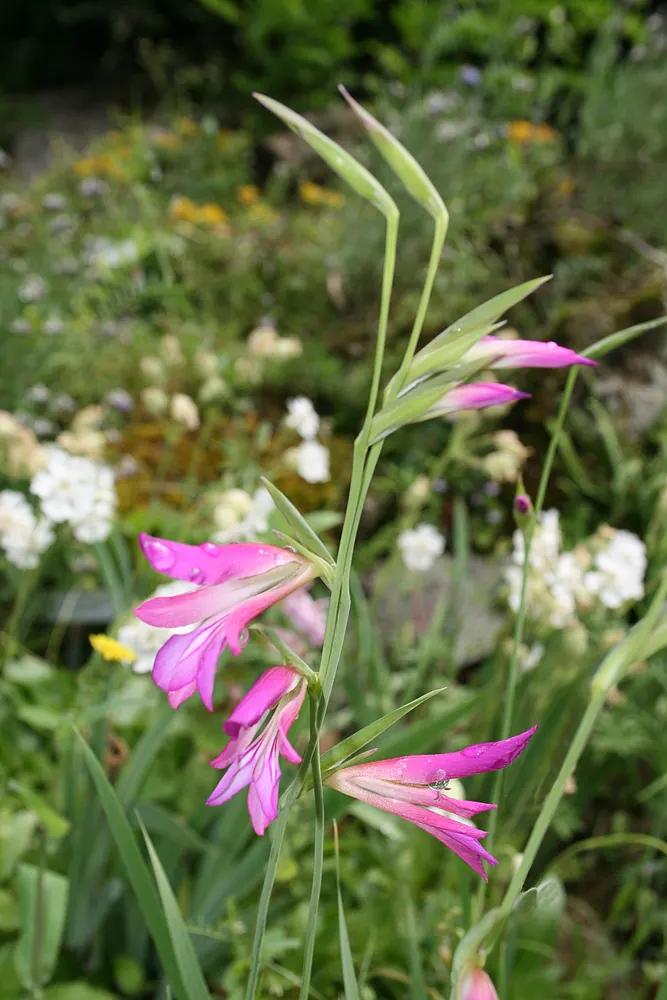
Photo: Jean-Pol GRANDMONT, CC BY-SA 3.0 (via Wikimedia Commons)
Field Gladiolus
Gladiolus italicus
Also known as Italian Gladiolus, Corn Flag, Wild Gladiolus
Key benefits
✦Traditional uses
✦Long before it was bred into the towering florist's gladiolus, Field Gladiolus grew wild through the wheat fields and olive groves of the Mediterranean, earning the old country name corn flag for the way its sword-shaped leaves stood among the grain. Ancient Romans gave it its name from gladius, sword, and folklore holds that fighters carried or wore the corms as a charm for courage rather than as any kind of medicine. Over the centuries it has been treasured chiefly as a garden and cut flower, its magenta blooms gathered into bouquets and its corms passed hand to hand between gardeners, while the plant itself was generally left alone as food or remedy given its irritant reputation.
How to grow & use it
✦The full apothecary for Field Gladiolus
Traditional remedies and step-by-step preparations, a complete growing guide, and how to harvest, dry, and store it, all unlocked with HerbLens Unlimited.
- ✦Remedies & preparations
- ✦ Growing guide
- ✦Harvest & storage
From under $6 a month. Free plant identifications always included.
- ✦Corn poppy
- ✦Cornflower
- ✦Lavender
- ✦Garden hybrid gladiolus (Gladiolus x hortulanus)
- ✦Ixia
“For the wild, magenta-streaked cousin of the florist's gladiolus, the one that still turns a wheat field into a ribbon of silk each May.”
The name Gladiolus comes from the Latin gladius, meaning sword, for the plant's blade-shaped leaves. The Roman naturalist Pliny the Elder recorded that gladiators sometimes wore the corms strung around the neck as an amulet, believing they granted courage and protection in the arena.
Corms are toxic if eaten and are a documented hazard to cats, dogs, and horses, causing drooling, vomiting, or lethargy. The corms and sap can also irritate human skin or the mouth, so keep them away from children and pets.