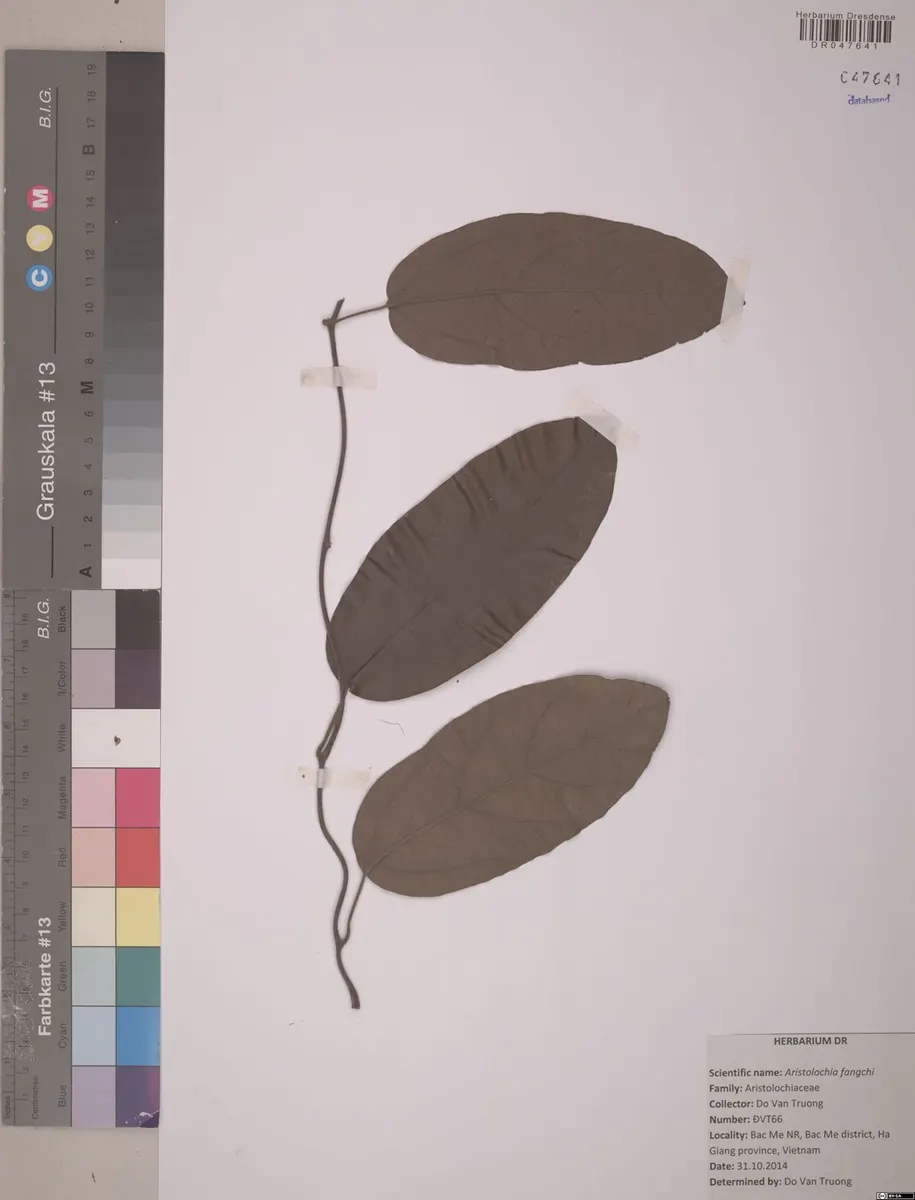
Photo: GBIF contributor, CC BY (via GBIF)
Guang Fang Ji
Aristolochia fangchi
Also known as Fangchi, Southern Fangji, Guangxi Aristolochia, Aristolochia Root
Key benefits
✦Traditional uses
✦In older Chinese herbal medicine, the dried root sold as 'guang fang ji' was brewed into decoctions for what practitioners called wind-damp conditions, joint pain, swelling, and water retention. It was valued as a companion herb in formulas meant to move fluid and ease inflammation in the limbs. That history came to an abrupt and sobering end in the 1990s, when this root was found to be the hidden cause of severe kidney disease in patients who believed they were taking a gentler, unrelated herb. Today it survives in the historical record as a cautionary chapter in herbal medicine rather than as a plant anyone should prepare or consume.
How to grow & use it
✦The full apothecary for Guang Fang Ji
Traditional remedies and step-by-step preparations, a complete growing guide, and how to harvest, dry, and store it, all unlocked with HerbLens Unlimited.
- ✦Remedies & preparations
- ✦ Growing guide
- ✦Harvest & storage
From under $6 a month. Free plant identifications always included.
- ✦Angelica sinensis (dang gui), as a historical formula companion, never combined for home use
- ✦Astragalus (huang qi), noted alongside it in old formulas, not a recommendation to combine and take
- ✦Boswellia (frankincense) for traditional joint and inflammation support
- ✦Turmeric root for traditional anti-inflammatory use
“A plant remembered not for what it heals, but for the lesson it taught about the danger of a mistaken name.”
In the early 1990s, women at a Brussels weight loss clinic began developing sudden kidney failure. Investigators eventually traced the cause to a labeling mix-up: Aristolochia fangchi had been substituted for the intended herb, Stephania tetrandra, because their Chinese names, guang fang ji and han fang ji, look and sound alike. That outbreak led scientists to identify aristolochic acid and eventually link it to kidney failure and urinary tract cancers worldwide, reshaping how herbal ingredients are verified today.
Aristolochia fangchi contains aristolochic acid, a potent kidney toxin and a substance the International Agency for Research on Cancer classifies as a definite human carcinogen. Ingesting it, in any amount and any form, has been linked to irreversible kidney failure (aristolochic acid nephropathy) and to urinary tract cancers, sometimes appearing years after exposure. It is banned or tightly restricted in the United States, Canada, the United Kingdom, the European Union, and numerous other countries, and it has no established safe dose. It should never be grown for consumption, foraged, brewed, or taken in any preparation, and it should never be used as a substitute for other "fang ji" herbs, since confusion between similarly named roots is exactly what caused past poisoning outbreaks. If you have taken any product containing this plant or an unverified "fang ji" ingredient, speak with a qualified healthcare professional promptly, particularly regarding kidney function testing.