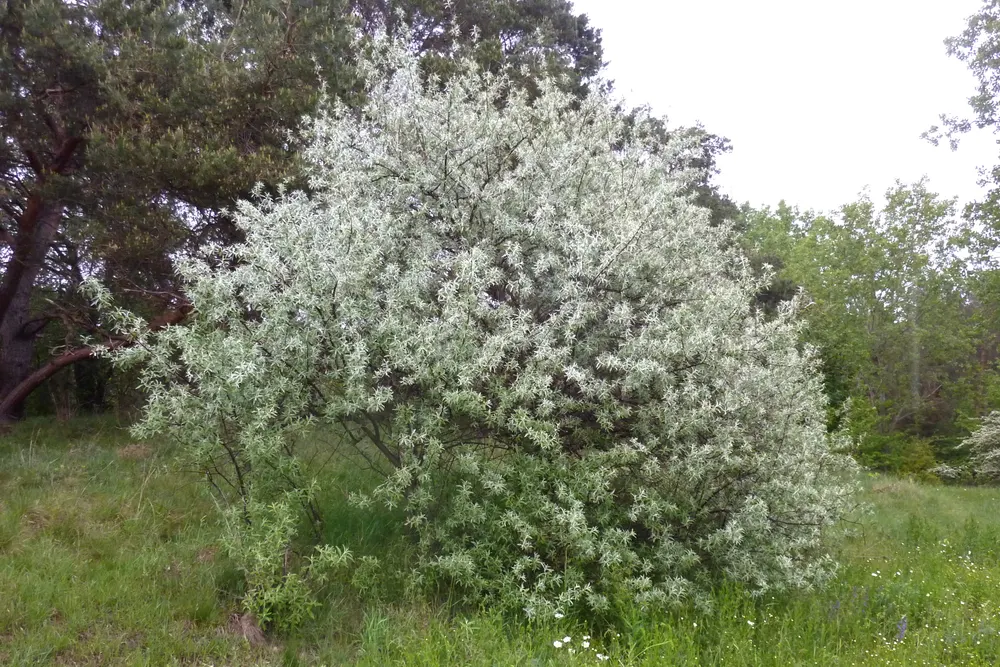
Photo: Katrin Schneider / korina.info, CC BY-SA 4.0 (via Wikimedia Commons)
Russian Olive
Elaeagnus angustifolia
Also known as Oleaster, Silverberry, Wild Olive, Trebizond Date, Senjed
Key benefits
✦Traditional uses
✦Long before it traveled the world as a hardy hedgerow tree, Russian olive was prized along the Silk Road for its sweet, mealy, date-like fruit, dried and carried the way other travelers carried figs or raisins. In Persian households the dried fruit, known as senjed, has traditionally been nibbled after meals and simmered into a mild tonic for digestive comfort, while folk healers across Iran and Central Asia turned to the fruit and flowers for joint and bone aches. The intensely perfumed blossoms were so beloved that entire orchards were once planted just for their scent, which people believed could be carried on the wind for miles.
How to grow & use it
✦The full apothecary for Russian Olive
Traditional remedies and step-by-step preparations, a complete growing guide, and how to harvest, dry, and store it, all unlocked with HerbLens Unlimited.
- ✦Remedies & preparations
- ✦ Growing guide
- ✦Harvest & storage
From under $6 a month. Free plant identifications always included.
- ✦Cinnamon
- ✦Rosehip
- ✦Ginger
- ✦Jujube (Chinese date)
- ✦Hawthorn berry
“For a taste of the old Silk Road, sweet, mealy, and mild enough to sip as a gentle after-dinner tonic.”
Senjed, the dried fruit of the Russian olive, holds a place of honor on the Persian Nowruz table among the seven symbolic Haft-Seen items, where it represents love and affection, a tradition rooted in the old belief that the tree's blossoms carried a scent so sweet it could stir romance in anyone who caught it on the breeze.
The fruit is a safe traditional food, but the tree is classified as invasive or restricted in many U.S. states and Canadian provinces, so check local rules before planting it. Its pollen can trigger seasonal allergies.