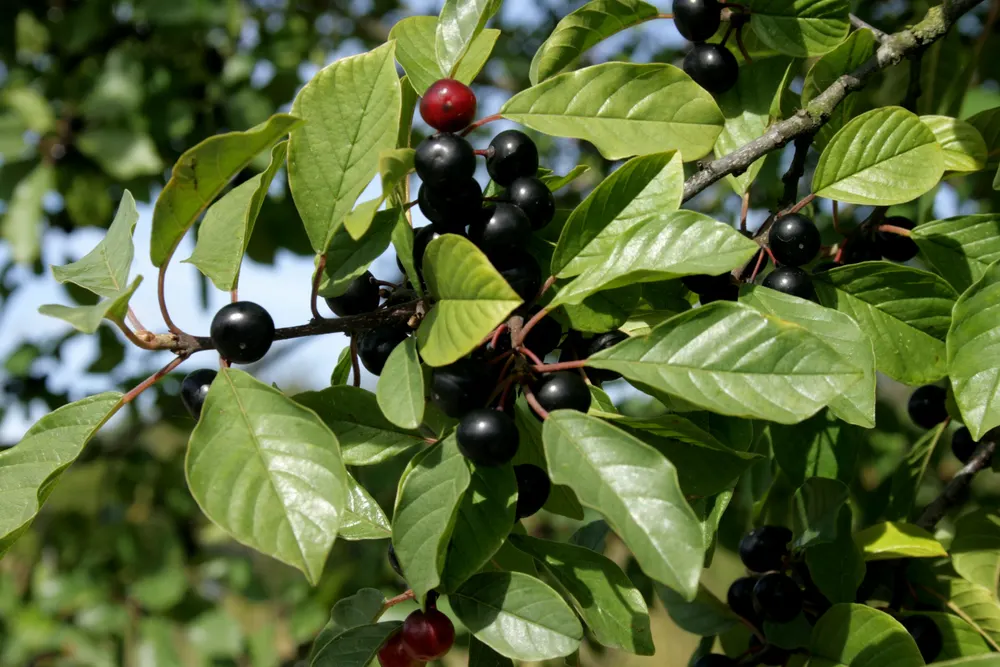
Photo: Sten Porse, CC BY-SA 3.0 (via Wikimedia Commons)
Alder Buckthorn
Frangula alnus
Also known as Black Dogwood, Frangula, Arrow Wood, Glossy Buckthorn (regional), Rhamnus frangula
Key benefits
✦Traditional uses
✦For centuries, apothecaries across Europe kept a jar of alder buckthorn bark on the shelf as one of the most dependable purgatives in the herbal cabinet, a gentler cousin to the American cascara sagrada. Country healers knew a secret the shrub itself does not give up easily: the freshly stripped bark is too harsh and nauseating to use, so it was set aside and aged for a full year, or gently dried and warmed, before it was ever considered fit for the teapot. Once tamed by time, the bark was traditionally steeped into a mild decoction and reached for only occasionally, to nudge a sluggish digestion back into rhythm. It found its way into old pharmacopoeias under the Latin name Frangula, meaning to break, a nod to how easily its slender branches snap.
Growing guide
✦Fresh to dried
✦- ✦Ginger
- ✦Fennel
- ✦Licorice root
- ✦Cascara sagrada
- ✦Senna leaf
“For the rare evening when the body asks, gently, for a nudge back toward balance.”
Alder buckthorn is the sole food plant for the caterpillars of the brimstone butterfly, so gardeners who plant it are, in effect, planting a nursery for one of spring's first butterflies on the wing.
Fresh, unaged alder buckthorn bark is toxic and can cause severe cramping, nausea, and vomiting; it must be dried and aged for at least one year (or artificially aged with heat) before it was traditionally considered safe to prepare. The bark contains anthraquinone glycosides and was never used as a long-term remedy, since prolonged use of any anthraquinone laxative can lead to dependency, electrolyte and potassium loss, and worsening of bowel function over time. It was traditionally avoided during pregnancy and breastfeeding, in children, and by anyone with inflammatory bowel disease, Crohn's disease, ulcerative colitis, or intestinal obstruction. Because potassium loss from overuse can affect heart rhythm, it was also traditionally avoided alongside heart medications such as digoxin, diuretics, or corticosteroids. As with any herb that acts this strongly on the body, please speak with a qualified healthcare provider before considering its use, especially if you take other medications or have an existing health condition.