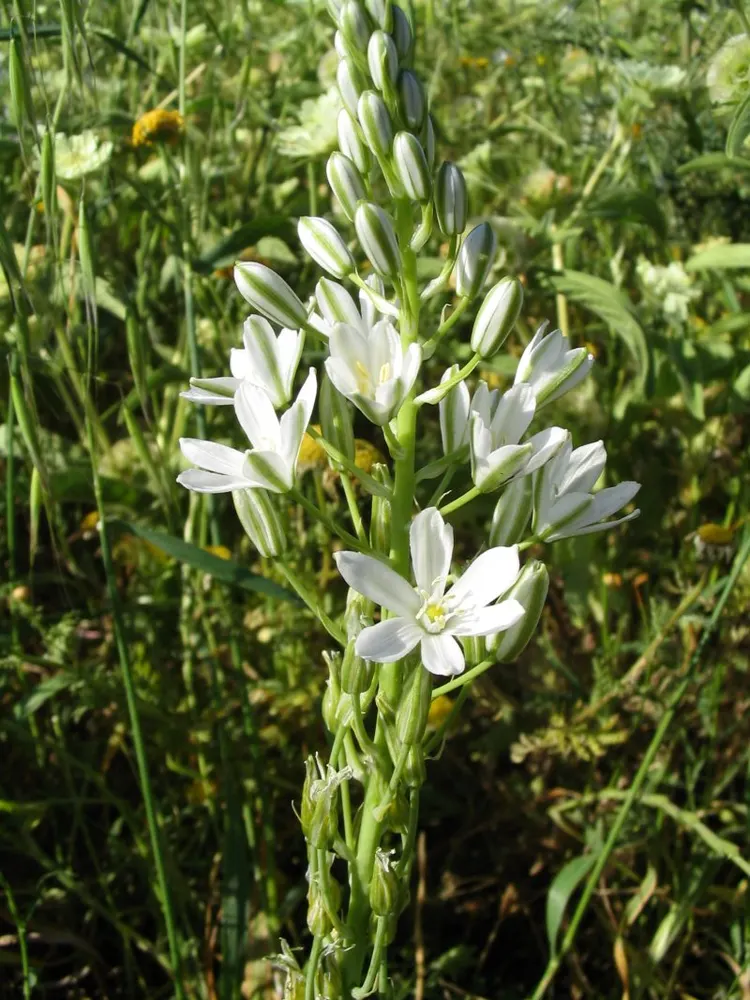
Photo: Iorsh at English Wikipedia, Public domain (via Wikimedia Commons)
Pyramidal Star-of-Bethlehem
Ornithogalum narbonense
Also known as Narbonne Star-of-Bethlehem, Southern Star-of-Bethlehem, Narbonne Ornithogalum
Key benefits
✦Traditional uses
✦Across the dry hillsides of the Mediterranean, farmers and shepherds came to know this plant by sight and to give it a wide berth, since its bulbs were understood to be dangerous to grazing animals rather than useful to people or livestock. Unlike many of its garden cousins, Pyramidal Star-of-Bethlehem carries no meaningful history in folk medicine or the kitchen. Its story instead belongs to the flower garden, where generations of Mediterranean and later European gardeners prized its tidy spikes of white, star-shaped blooms as a graceful, low-maintenance addition to spring borders and cutting beds.
How to grow & use it
✦The full apothecary for Pyramidal Star-of-Bethlehem
Traditional remedies and step-by-step preparations, a complete growing guide, and how to harvest, dry, and store it, all unlocked with HerbLens Unlimited.
- ✦Remedies & preparations
- ✦ Growing guide
- ✦Harvest & storage
From under $6 a month. Free plant identifications always included.
- ✦Grape hyacinth (companion spring bulb, not for combined ingestion)
- ✦Daffodil (companion spring bulb)
- ✦Species tulips (companion spring bulb)
- ✦Ornithogalum umbellatum (common Star-of-Bethlehem, also toxic, ornamental substitute)
- ✦Camassia (a genuinely edible bulb sometimes chosen instead where an edible meadow bulb is wanted)
“For a spring border that climbs in tiers of starry white, like a small pale pyramid catching the early light.”
The genus name Ornithogalum comes from the ancient Greek for bird's milk, ornis and gala, an old phrase the Greeks used for something rare and wondrous. Farmers in the Mediterranean, meanwhile, had a far more practical name for these bulbs: poison onion, because grazing sheep and goats that dug them up sometimes sickened or died.
Ornithogalum narbonense, like other members of the Star-of-Bethlehem genus, contains cardiac glycosides (cardenolides) concentrated most heavily in the bulb, along with other toxic compounds throughout the plant. Ingestion can cause nausea, vomiting, abdominal pain, and in significant amounts may affect heart rhythm, similar to the toxicity seen with foxglove. It is considered toxic to people, dogs, cats, and grazing livestock such as sheep, goats, and cattle, and there is no established safe internal dose. This plant has no traditional or modern use as a food or herbal remedy; it should be treated strictly as an ornamental and kept out of reach of children, pets, and livestock, with bulbs planted where they will not be mistaken for edible ones. If ingestion is suspected, contact a poison control center, physician, or veterinarian right away rather than attempting home treatment.