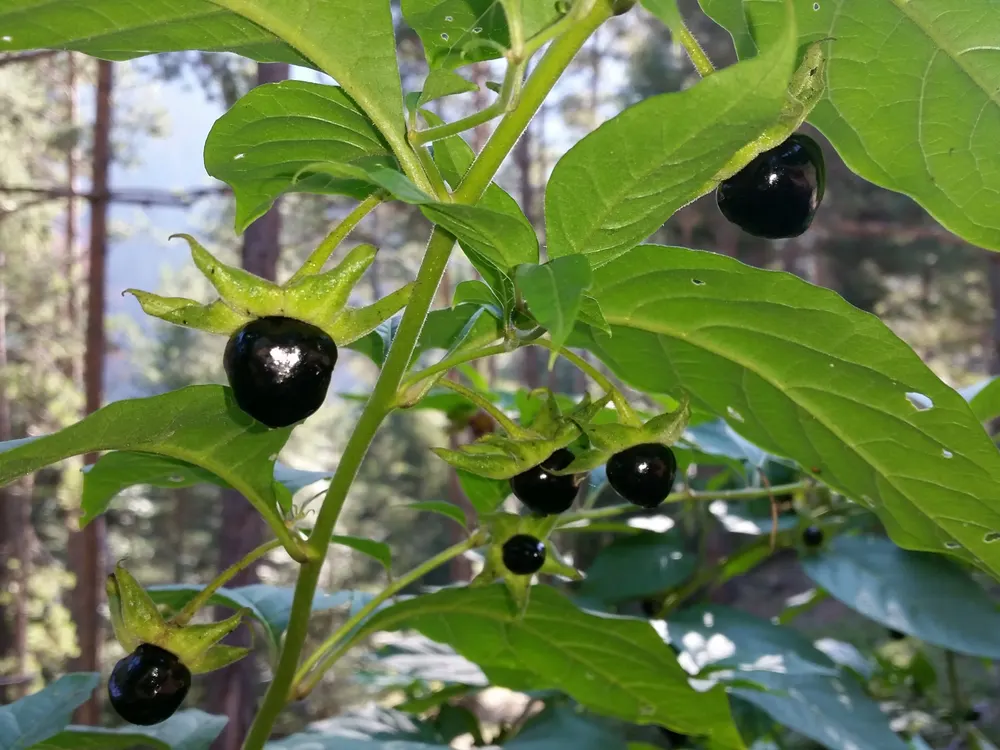
Photo: Joan Simon from Barcelona, España, CC BY-SA 2.0 (via Wikimedia Commons)
Deadly Nightshade
Atropa belladonna
Also known as Belladonna, Devil's Cherries, Death Cherries, Sorcerer's Berry, Divale
Key benefits
✦Traditional uses
✦Belladonna's story belongs more to pharmacology and folklore than to the kitchen or the home apothecary. Renaissance Italian women were said to place drops of its juice in their eyes to dilate the pupils into the wide, dark-eyed look considered fashionable at the time, which is likely where the name belladonna, meaning beautiful woman, comes from. Long before that, the plant carried a darker reputation as a poisoner's herb and a supposed ingredient in witches' flying ointments, whispered about more than it was ever safely handled. Its true legacy is medical: isolated and purified under strict pharmaceutical control, the alkaloid atropine derived from this plant became a genuinely important tool in surgery, ophthalmology, and emergency medicine, but always in the hands of trained chemists and physicians, never as a home remedy.
How to grow & use it
✦The full apothecary for Deadly Nightshade
Traditional remedies and step-by-step preparations, a complete growing guide, and how to harvest, dry, and store it, all unlocked with HerbLens Unlimited.
- ✦Remedies & preparations
- ✦ Growing guide
- ✦Harvest & storage
From under $6 a month. Free plant identifications always included.
“The plant every field guide teaches you to recognize so you know, unmistakably, to walk past it.”
The genus name Atropa comes from Atropos, the eldest of the three Greek Fates, the one who cut the thread of a person's life. Botanists gave belladonna that name centuries ago as a quiet, permanent warning about exactly what the plant can do.
Atropa belladonna is one of the most toxic plants in the Northern Hemisphere and every part of it, roots, leaves, flowers, and especially the sweet-tasting black berries, can be fatal if eaten. It contains potent tropane alkaloids, chiefly atropine, hyoscyamine, and scopolamine, which disrupt the nervous system and can cause dilated pupils, dry mouth, racing heartbeat, confusion, hallucinations, seizures, coma, and death. In children, as few as two to five berries have proven lethal. There is no traditional home tea, tincture, or topical preparation of this plant that is safe, and none is given here. It should never be ingested, applied to skin, or given to pets or livestock in any form. If you suspect belladonna poisoning, treat it as a medical emergency and contact emergency services or a poison control center immediately. Wear gloves if you must handle the plant for identification or removal, keep it well away from children's play areas, and consult a physician, toxicologist, or licensed poison control professional with any concerns rather than attempting any home treatment.