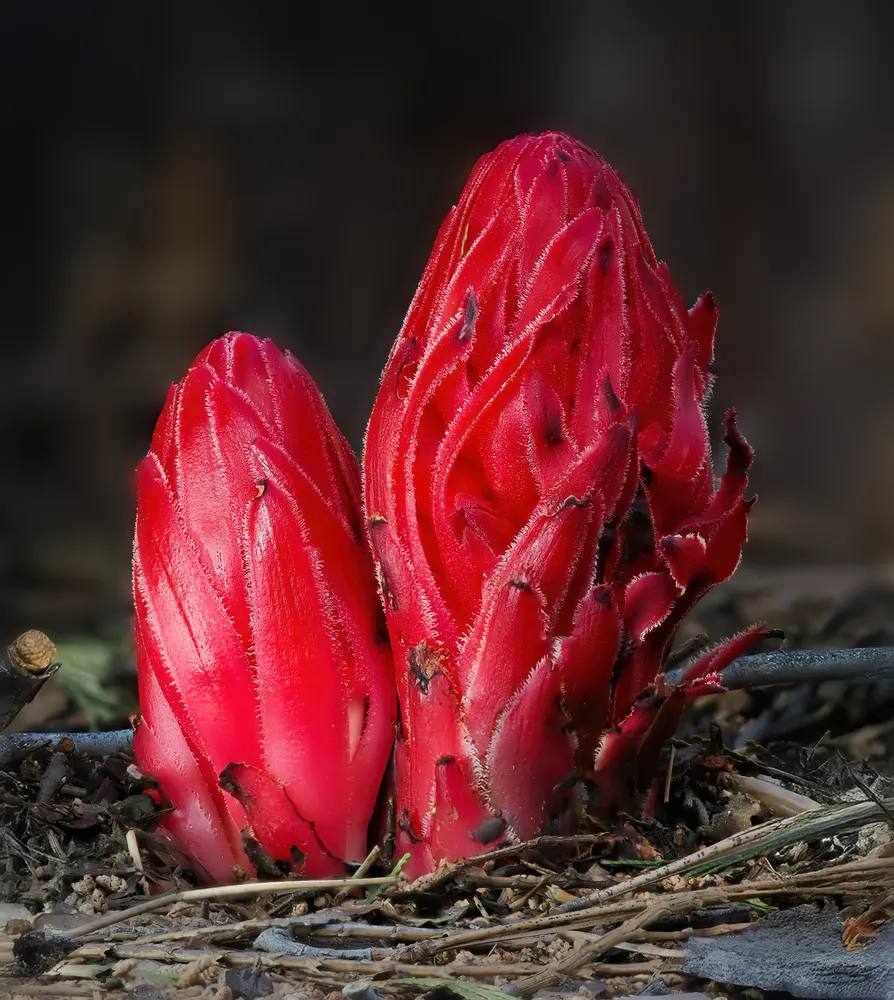
Photo: Alan Rockefeller, CC BY 4.0 (via Wikimedia Commons)
Snow Plant
Sarcodes sanguinea
Also known as Snow Plant, California Snow Plant, Sarcodes
Key benefits
✦Traditional uses
✦Snow plant has never held a real place in traditional herbal or culinary practice. Its fame comes from spectacle rather than utility: a shock of waxy, blood-red stalks erupting straight out of the forest duff, sometimes through the last crust of melting snow, with no green leaves anywhere on the plant. Early Sierra Nevada travelers and naturalists, John Muir among them, wrote about stumbling on it in awe, describing it as one of the strangest and most beautiful things the forest floor could produce. That sense of wonder, rather than any record of eating or brewing it, is the entire tradition attached to this plant.
How to grow & use it
✦The full apothecary for Snow Plant
Traditional remedies and step-by-step preparations, a complete growing guide, and how to harvest, dry, and store it, all unlocked with HerbLens Unlimited.
- ✦Remedies & preparations
- ✦ Growing guide
- ✦Harvest & storage
From under $6 a month. Free plant identifications always included.
“For the wonder of finding it, not for the gathering of it.”
Snow plant has no chlorophyll and never turns green, not even as a seedling. Instead of photosynthesizing, it taps into the same underground fungal network that already connects to the roots of nearby pines and firs, quietly drawing off sugars those trees produced and shared with their fungal partners. Botanists call this trick mycoheterotrophy, and it means the snow plant is, in a sense, feeding on a tree's leftovers without ever touching the tree itself.
Snow plant has no history of safe use as food or medicine and should not be eaten. It is rare and often legally protected, so leave it growing rather than digging or picking it.