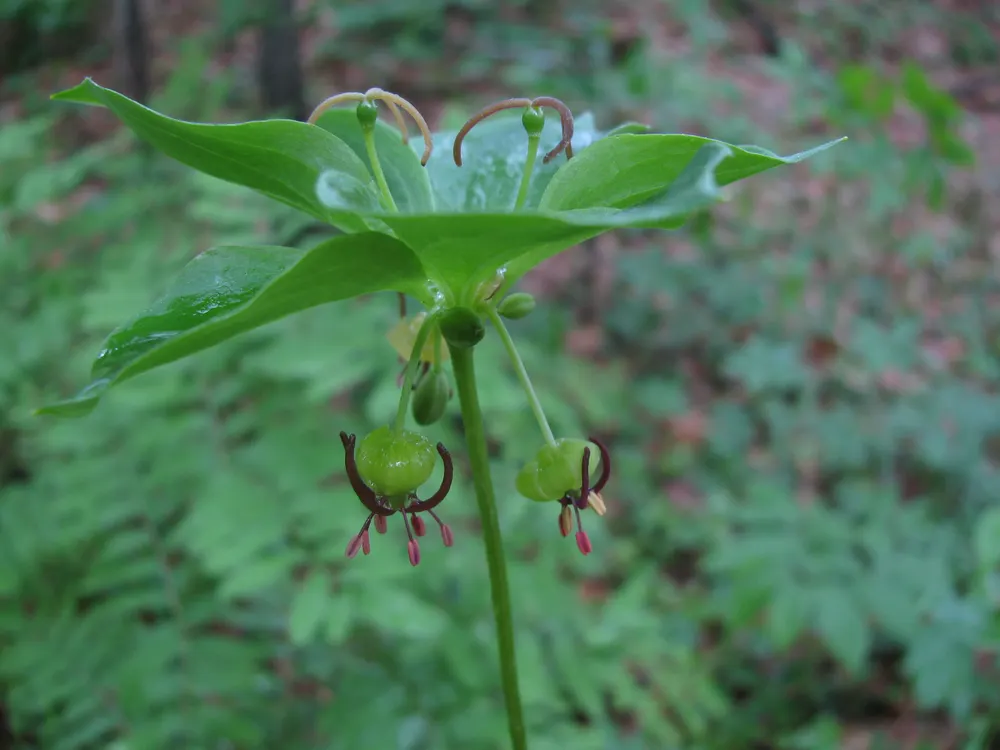
Photo: Jomegat, CC BY-SA 3.0 (via Wikimedia Commons)
Indian Cucumber-root
Medeola virginiana
Also known as Indian Cucumber, Cucumber Root, Wild Cucumber Root
Key benefits
✦Traditional uses
✦Long before it was a forager's curiosity, the crisp white rootstock of Indian cucumber-root was a familiar trailside snack for Cherokee, Iroquois, and Ojibwe families, who dug it up, brushed off the soil, and ate it raw for its clean, unmistakable cucumber flavor. Some nations also simmered the root into a mild decoction, used traditionally to ease water retention and settle an unsettled stomach. Because the plant only grows its telltale upper whorl of three leaves and its small starry flowers once it reaches three years of age, generations of woodland travelers came to read a patch of Medeola virginiana as a quiet sign that the forest around them had gone a long while undisturbed.
How to grow & use it
✦The full apothecary for Indian Cucumber-root
Traditional remedies and step-by-step preparations, a complete growing guide, and how to harvest, dry, and store it, all unlocked with HerbLens Unlimited.
- ✦Remedies & preparations
- ✦ Growing guide
- ✦Harvest & storage
From under $6 a month. Free plant identifications always included.
- ✦Wild ginger
- ✦Dandelion root
- ✦Sarsaparilla
- ✦Solomon's seal root
- ✦Fresh garden cucumber (for flavor only)
“When the trail runs quiet through old hardwoods and you want a taste of the forest's own secret crunch.”
The genus name Medeola nods to Medea, the herb-wise sorceress of Greek myth, but the plant's real magic trick is botanical: a young plant grows only a single whorl of five to nine leaves for its first two or three years, and only once it is mature enough to flower does it send up a second, smaller whorl of three leaves atop the stem, a two-tiered signature found on no other plant in its woods.
Indian cucumber-root's crisp root is safe to eat raw with no documented toxicity, but the plant grows slowly and dies when dug up, so forage only where it's genuinely abundant. Its leaves can resemble other woodland plants before it flowers, so be sure of your identification.