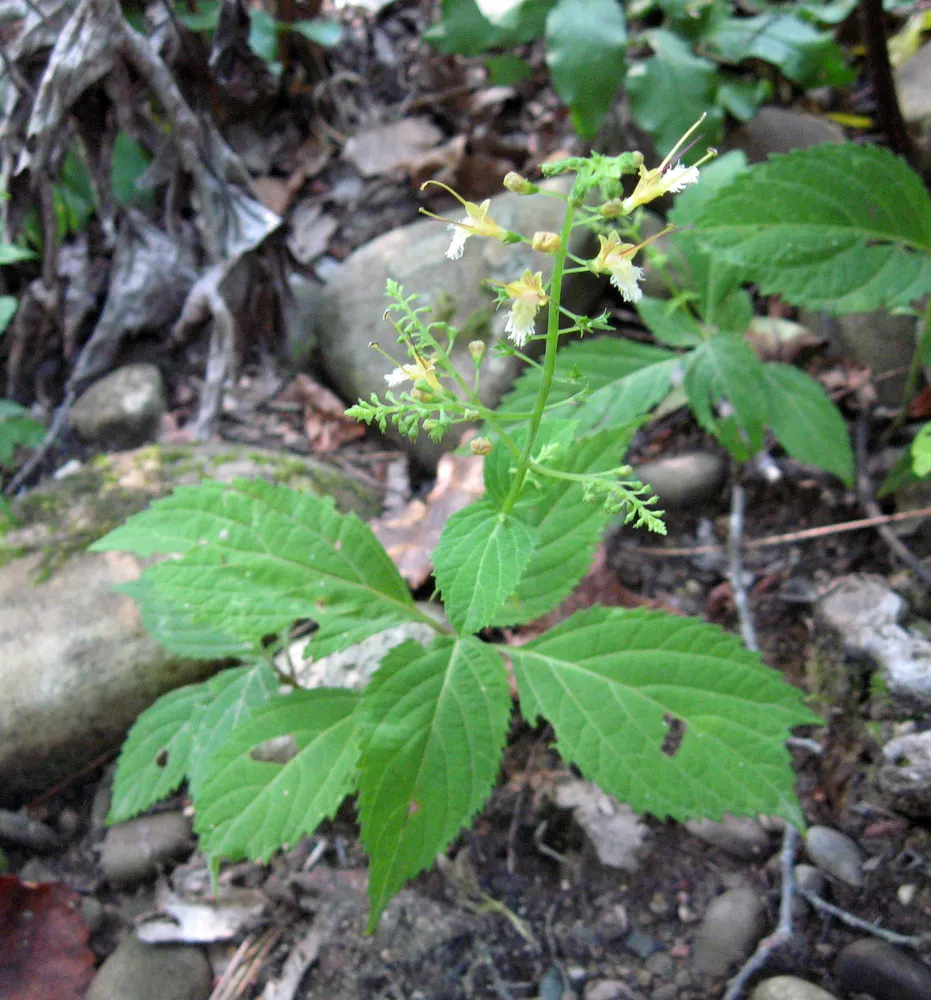
Photo: Mason Brock (Masebrock), Public domain (via Wikimedia Commons)
Stone Root
Collinsonia canadensis
Also known as Horse Balm, Richweed, Knob Root, Knot Root, Ox Balm
Key benefits
✦Traditional uses
✦Stone root earned its name from herbalists who noted both its hard, stone-like knobby rhizome and its traditional use for complaints of the kidneys and bladder. It became a cornerstone remedy among the nineteenth century Eclectic physicians of North America, who reached for it especially to traditionally support varicose veins, hemorrhoids, and a heavy, sluggish feeling in the digestive tract. Native to the moist eastern woodlands it still grows in today, stone root was valued as a steady, grounding root medicine long before it found its way into apothecary cabinets.
How to grow & use it
✦The full apothecary for Stone Root
Traditional remedies and step-by-step preparations, a complete growing guide, and how to harvest, dry, and store it, all unlocked with HerbLens Unlimited.
- ✦Remedies & preparations
- ✦ Growing guide
- ✦Harvest & storage
From under $6 a month. Free plant identifications always included.
- ✦Witch Hazel
- ✦Horse Chestnut
- ✦Butcher's Broom
- ✦Horse Chestnut
- ✦Witch Hazel
“For the slow, steady work of supporting tired veins and a sluggish digestion, the way a stone root tea has been steeped for generations.”
Stone root's crushed leaves give off a strong lemony, balsam-like scent, which is why old-time herb gatherers also called the plant citronella horsebalm and said horses would seek it out along the woodland edges where it grew.
Stone root is generally mild and low in toxicity but hasn't been well studied. It may have a diuretic or laxative effect, so those with kidney conditions should be cautious, and it's best avoided during pregnancy and breastfeeding since safety there isn't established.