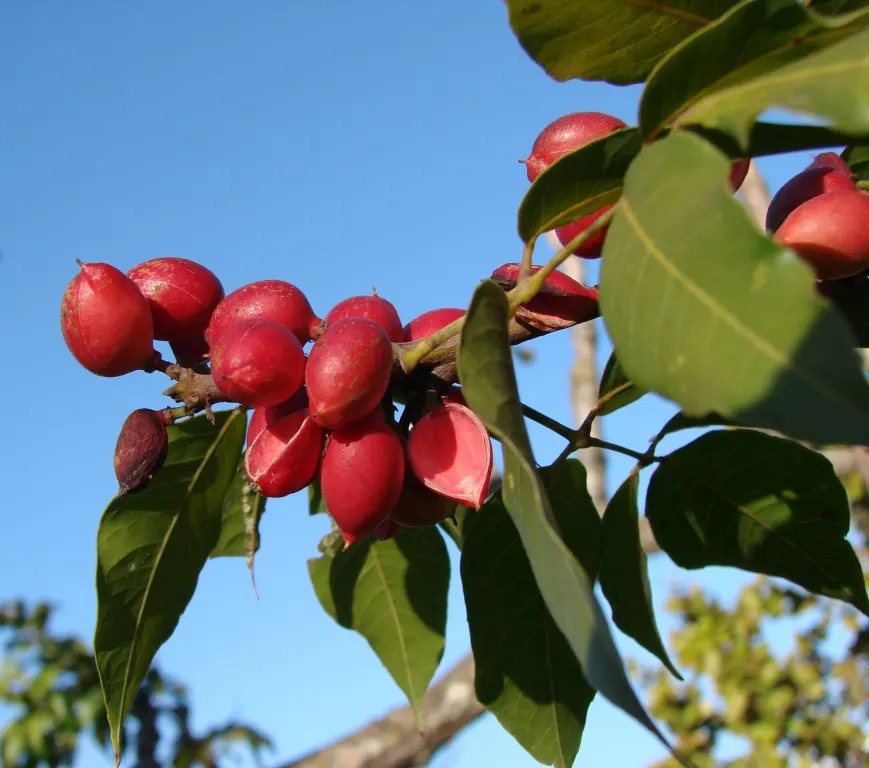
Photo: João Medeiros, CC BY 2.0 (via Wikimedia Commons)
Breu Branco
Protium heptaphyllum
Also known as Almécega, Brazilian Elemi, Amescla, Breu
Key benefits
✦Traditional uses
✦Long before this tree had a Latin name, Indigenous and caboclo communities of the Amazon were slicing shallow cuts into its trunk and returning days later to gather the fragrant amber resin that wept from the bark. That resin, known across Brazil as breu branco, became part of daily life, rubbed near aching joints, worked into salves for the skin, and burned as incense to clear the air of homes and to scent religious processions in place of the European frankincense that was scarce and costly in the colonial Amazon. Rubber tappers and river communities still gather it today much as their grandparents did, and it remains one of the most familiar resins sold in herb stalls and markets throughout northern Brazil.
How to grow & use it
✦The full apothecary for Breu Branco
Traditional remedies and step-by-step preparations, a complete growing guide, and how to harvest, dry, and store it, all unlocked with HerbLens Unlimited.
- ✦Remedies & preparations
- ✦ Growing guide
- ✦Harvest & storage
From under $6 a month. Free plant identifications always included.
- ✦Copal
- ✦Palo Santo
- ✦Frankincense (Boswellia)
- ✦Frankincense (Boswellia)
- ✦Copal
“For a slow, clean-burning resin that carries the hush of the rainforest into any room.”
Breu branco belongs to the very same botanical family as true frankincense, and its resin smells so similar that Brazilian churches once burned it in processions as a homegrown stand-in when imported Boswellia incense from the Old World was too costly to import.
Breu branco resin is traditionally used externally and isn't known to be toxic, but it hasn't been studied for internal use, so it's best kept as a topical wash. It comes from the same resin family as frankincense and myrrh, so patch test first if you're sensitive to those.