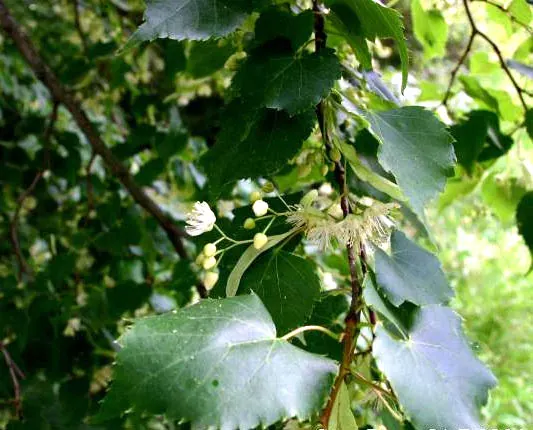
Photo: CC BY-SA 3.0 (via Wikimedia Commons)
Linden
Tilia cordata
Also known as Lime Tree, Tilleul, Basswood, Linden Blossom, Small-Leaved Lime
Key benefits
✦Traditional uses
✦Few trees are as woven into everyday European life as the linden. In France, tilleul tea has been a bedtime ritual for generations, poured after supper to ease the mind toward sleep. Village greens were often planted with a single great linden as a gathering place, and folk healers turned to its pale, honey-scented flowers when someone came in feverish, fretful, or simply worn thin from the day. It became one of the gentlest and most trusted flowers in the household herb tin, the kind of remedy a grandmother kept without needing to explain why.
How to grow & use it
✦The full apothecary for Linden
Traditional remedies and step-by-step preparations, a complete growing guide, and how to harvest, dry, and store it, all unlocked with HerbLens Unlimited.
- ✦Remedies & preparations
- ✦ Growing guide
- ✦Harvest & storage
From under $6 a month. Free plant identifications always included.
- ✦Chamomile
- ✦Lemon Balm
- ✦Lavender
- ✦Chamomile
- ✦Passionflower
“For the quiet hour after supper, when the day needs to soften into evening.”
Linden honey, made by bees who favor the tree's abundant summer blossoms, is prized across Europe for its distinct minty, almost resinous flavor, and some old village lindens were used as open-air meeting and justice sites, their wide shade serving as a kind of natural town hall.
Linden tea is fine occasionally, but very frequent, long-term use has traditionally been linked to added strain on the heart, so keep it a periodic comfort rather than a daily habit. It may add to drowsiness from sedative medications, and those allergic to linden pollen should avoid it.