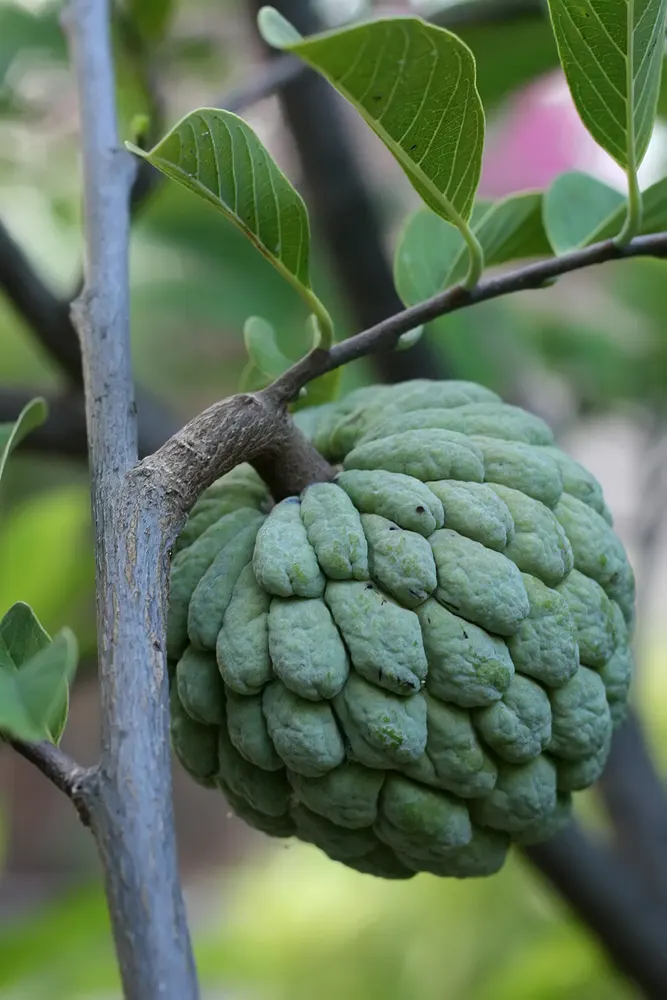
Photo: Muhammad Mahdi Karim, GFDL 1.2 (via Wikimedia Commons)
Sugar Apple
Annona squamosa
Also known as Sweetsop, Custard Apple, Ata, Anon, Sitaphal
Key benefits
✦Traditional uses
✦Sugar apple has been cultivated across the tropics for centuries, likely native to the Caribbean and tropical Americas before spreading early to India and Southeast Asia, where it became a beloved dooryard fruit tree woven into home orchards and market stalls alike. The soft, custardy, segmented fruit was and still is eaten fresh out of hand, its sweetness a welcome treat in hot climates long before refrigeration made other desserts easy to keep. Beyond the kitchen, rural communities across its range learned to put the tree's tougher parts to work outdoors, crushing the seeds and leaves as a traditional pest deterrent around homes and gardens rather than as something to eat or drink. That practical, external use of the seeds and leaves has been passed down for generations, even as the ripe fruit itself remained purely a food.
How to grow & use it
✦The full apothecary for Sugar Apple
Traditional remedies and step-by-step preparations, a complete growing guide, and how to harvest, dry, and store it, all unlocked with HerbLens Unlimited.
- ✦Remedies & preparations
- ✦ Growing guide
- ✦Harvest & storage
From under $6 a month. Free plant identifications always included.
- ✦Coconut
- ✦Lime
- ✦Vanilla
- ✦Cherimoya
- ✦Soursop
“For the moment the segmented shell yields to a gentle thumb and gives way to spoonfuls of sweet, custardy snow.”
Researchers studying an unusually high rate of atypical, Parkinson's-like illness in Guadeloupe traced part of the puzzle to annonacin, a compound concentrated in the seeds and leaves of Annona trees like the sugar apple, a finding that helped explain why traditional cultures always kept those plant parts out of the cooking pot.
The ripe fruit pulp is safely eaten as food, but the seeds, leaves, and bark contain neurotoxic compounds and should never be chewed or ingested. Always remove and discard the shiny black seeds before eating.