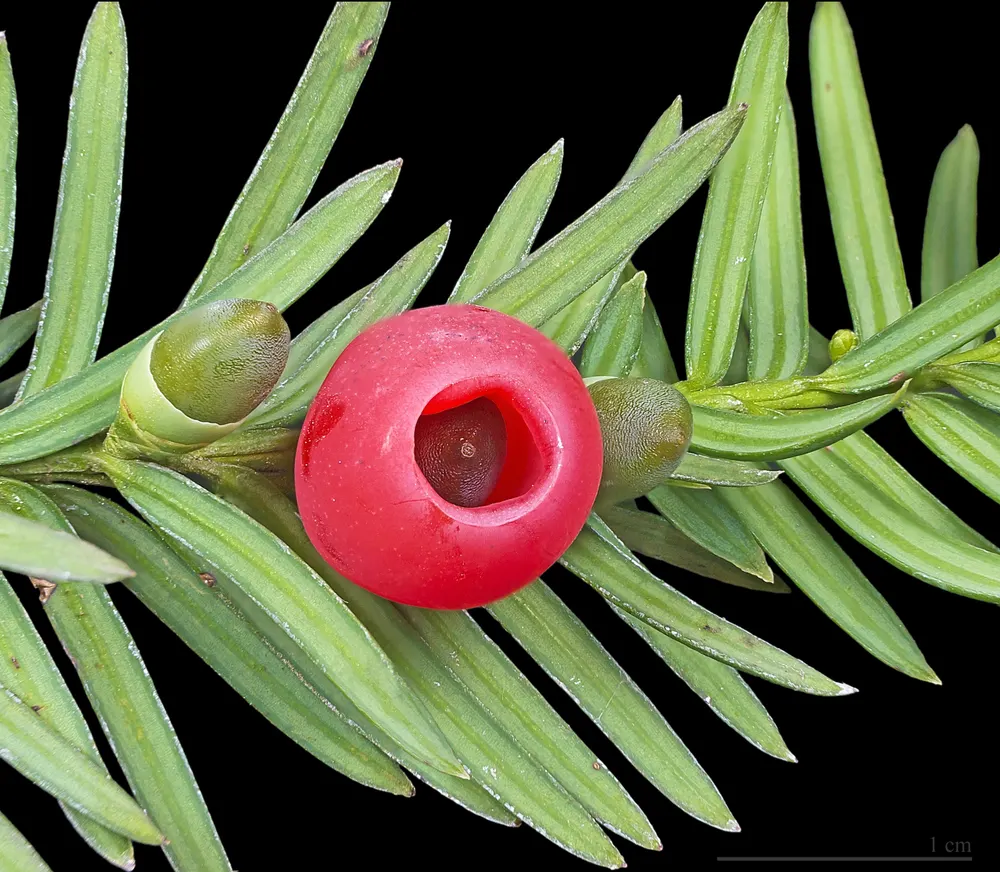
Photo: Didier Descouens, CC BY-SA 4.0 (via Wikimedia Commons)
English Yew
Taxus baccata
Also known as European Yew, Common Yew, Yew Tree
Traditional uses
✦The yew has stood at the edge of myth and medicine for thousands of years, planted in churchyards as a symbol of death and rebirth long before anyone understood why its needles could kill a grazing animal within hours. In the twentieth century, chemists found that compounds in the bark and needles, taxanes, could be transformed into paclitaxel, a chemotherapy drug that changed cancer treatment. That story belongs to the pharmaceutical laboratory, though, not the kitchen or the home apothecary. Every part of this tree except the soft red flesh of the aril is dangerously toxic, and even the seed inside that aril is deadly if chewed or swallowed.
How to grow & use it
✦The full apothecary for English Yew
Traditional remedies and step-by-step preparations, a complete growing guide, and how to harvest, dry, and store it, all unlocked with HerbLens Unlimited.
- ✦Remedies & preparations
- ✦ Growing guide
- ✦Harvest & storage
From under $6 a month. Free plant identifications always included.
“A tree to admire from a respectful distance, not to gather from.”
Some yew trees in British churchyards are believed to predate the churches built beside them, with a few specimens, like the Fortingall Yew in Scotland, estimated at over two thousand years old, making them among the oldest living things in Europe.
Taxus baccata is highly toxic and every part of the plant, including the needles, bark, and especially the seeds, contains taxine alkaloids that can cause fatal heart arrhythmia. Only the soft red aril flesh is non-toxic; the hard seed within it is dangerous if chewed or broken and must never be swallowed. Poisoning can occur quickly and has caused death in both livestock and people, sometimes within hours of ingestion, with little warning before cardiac collapse. This plant should never be prepared as a tea, tincture, or any home remedy under any circumstances. If yew ingestion is suspected, treat it as a medical emergency and contact poison control or emergency services immediately rather than seeking routine advice from a qualified professional.