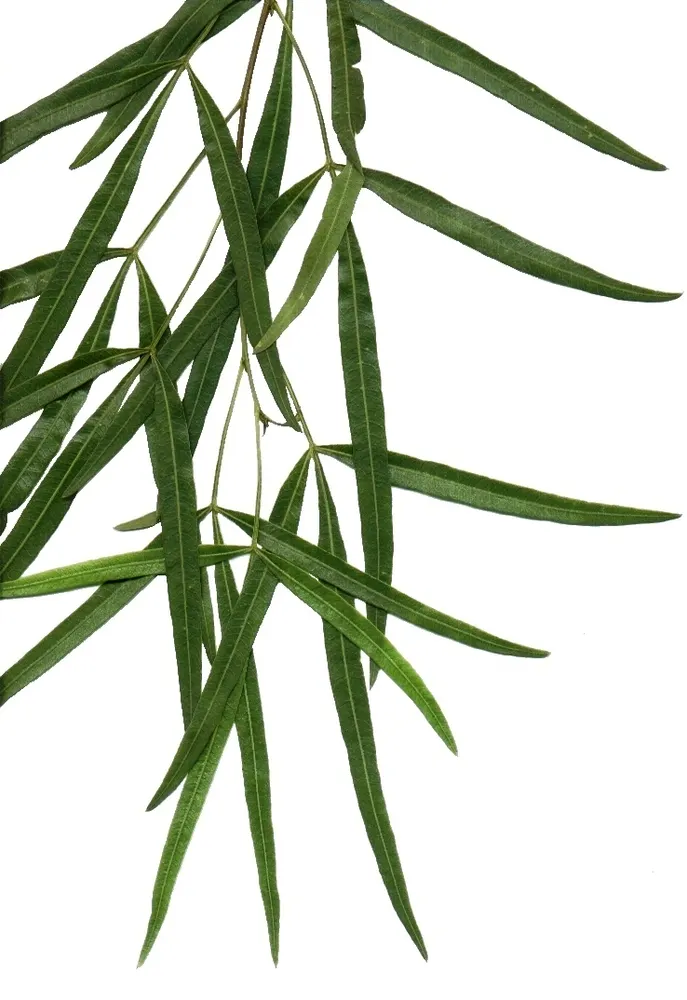
Photo: JMK at English Wikipedia, CC BY-SA 3.0 (via Wikimedia Commons)
Karee
Searsia lancea
Also known as African Sumac, Karee-boom, Wilger-karee, Rhus lancea (older synonym)
Key benefits
✦Traditional uses
✦Long before it was planted as a shade tree along South African streets, the karee was a working tree of the household. Communities across the drier reaches of southern Africa turned to its bark for a warming decoction when the stomach was unsettled, chewed its slender twigs to clean the teeth and freshen the breath, and used washes made from the leaves and bark on troubled skin. Its dense, termite-resistant wood was carved into tool handles and fence posts, and its small tart fruits were fermented into a traditional drink, much the way its northern cousins, the true sumacs, were used for tang and tartness in cooking. It is a tree that earned its keep in every part of daily life, not just as medicine.
How to grow & use it
✦The full apothecary for Karee
Traditional remedies and step-by-step preparations, a complete growing guide, and how to harvest, dry, and store it, all unlocked with HerbLens Unlimited.
- ✦Remedies & preparations
- ✦ Growing guide
- ✦Harvest & storage
From under $6 a month. Free plant identifications always included.
- ✦Peppermint
- ✦Ginger
- ✦Chamomile
- ✦Sumac (Rhus species)
- ✦Peppermint for digestive complaints
“For a tree that gives shade with one hand and a long memory of household remedies with the other.”
Karee trees are dioecious, meaning individual trees are either male or female. Only the female trees bear the small reddish-brown fruits, which birds flock to so eagerly that a fruiting karee can feel like its own small aviary.
Karee is related to poison ivy, mango, and cashew, and its sap or crushed leaves can irritate skin or cause allergic contact dermatitis in sensitive people. Traditional bark preparations were taken only occasionally, not as a regular tonic.