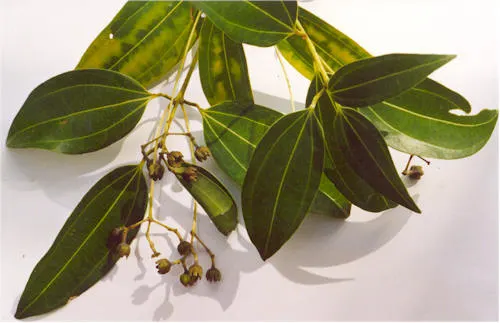
Photo: Public domain (via Wikimedia Commons)
Ceylon Cinnamon
Cinnamomum verum
Also known as True Cinnamon, Sweet Cinnamon, Sri Lanka Cinnamon, Cinnamomum zeylanicum
Key benefits
✦Traditional uses
✦Cinnamon is one of the oldest spices in continuous human use, prized in ancient Egypt for embalming and incense and carried along the earliest spice routes at a value once compared to gold. In Ayurvedic and traditional Chinese medicine, the warm, sweet bark has long been used to kindle a cold, sluggish digestion and to ease a chilly, damp constitution. Sri Lankan households have simmered it into teas and tonics for generations, valuing it as much for comfort as for flavor. Because true Ceylon cinnamon is so much milder than the cassia bark sold as generic cinnamon, it earned the nickname true cinnamon among traders who needed to tell the two apart.
How to grow & use it
✦The full apothecary for Ceylon Cinnamon
Traditional remedies and step-by-step preparations, a complete growing guide, and how to harvest, dry, and store it, all unlocked with HerbLens Unlimited.
- ✦Remedies & preparations
- ✦ Growing guide
- ✦Harvest & storage
From under $6 a month. Free plant identifications always included.
- ✦Ginger
- ✦Cardamom
- ✦Clove
- ✦Cassia cinnamon (Cinnamomum cassia)
- ✦Nutmeg
“When you want warmth in a cup and a little comfort for a heavy stomach.”
True Ceylon cinnamon quills are made of many paper-thin layers of bark rolled together like a cigar, while the cassia cinnamon found in most supermarket jars is a single thick curl, a difference traders once used to tell the true spice from its cheaper cousin at a glance.
Ceylon cinnamon is the gentler true cinnamon, with much less coumarin than common cassia cinnamon, but medicinal doses can lower blood sugar and may add to the effect of blood thinners. Stick to culinary amounts during pregnancy or breastfeeding.