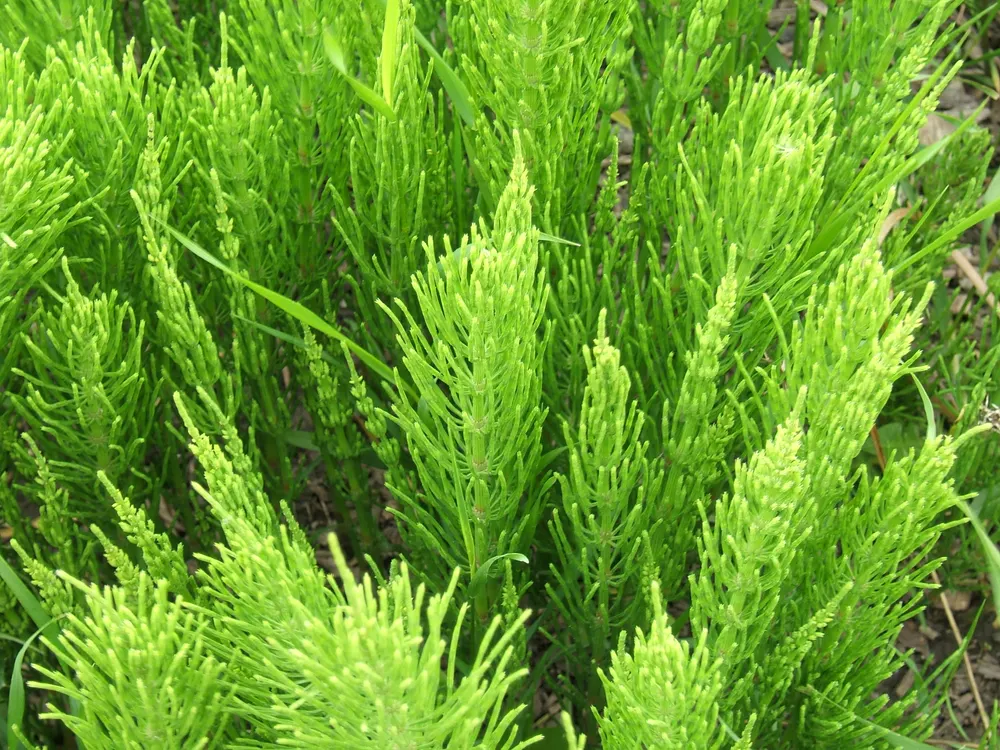
Photo: MPF, CC BY-SA 3.0 (via Wikimedia Commons)
Field Horsetail
Equisetum arvense
Also known as Horsetail, Common Horsetail, Shave Grass, Bottlebrush, Pewterwort
Key benefits
✦Traditional uses
✦Field horsetail is one of the oldest plants still walking beside us, and old herbals treated it with real respect. Roman and Greek physicians, including Dioscorides and Pliny, recommended it to help stop bleeding and knit wounds, and its old folk name scouring rush hints at another practical use, since its gritty, silica-filled stems were once bundled up and used to scrub pots and polish pewter. Across European and Native American herbal traditions, horsetail tea was steeped as a gentle support for the kidneys and bladder, and its mineral richness earned it a lasting place as a traditional tonic for brittle hair, weak nails, and tired connective tissue. It traveled from utility herb to beauty cabinet over centuries, but the plant itself has hardly changed at all.
How to grow & use it
✦The full apothecary for Field Horsetail
Traditional remedies and step-by-step preparations, a complete growing guide, and how to harvest, dry, and store it, all unlocked with HerbLens Unlimited.
- ✦Remedies & preparations
- ✦ Growing guide
- ✦Harvest & storage
From under $6 a month. Free plant identifications always included.
- ✦Nettle leaf
- ✦Dandelion leaf
- ✦Oatstraw
- ✦Nettle leaf
- ✦Oatstraw
“For the plant that has outlasted the dinosaurs and still offers its quiet, mineral strength to hair, nails, and skin.”
Field horsetail's ancestors were not modest ditch-side plants at all. During the Carboniferous period, tree-sized relatives called Calamites towered up to 100 feet over primeval swamps, and their fallen remains are woven into the coal seams we still mine today, a quiet reminder that this humble little plant is a living fragment of a much older world.
Field horsetail contains an enzyme that breaks down vitamin B1, so it's meant for modest, short-term use, not daily long-term use, and should be avoided with a thiamine deficiency, heavy alcohol use, or during pregnancy and breastfeeding. Its diuretic action can interact with lithium and other diuretics, so use caution with kidney or heart conditions. Only young, properly identified stems are used, and it's not considered appropriate for children.