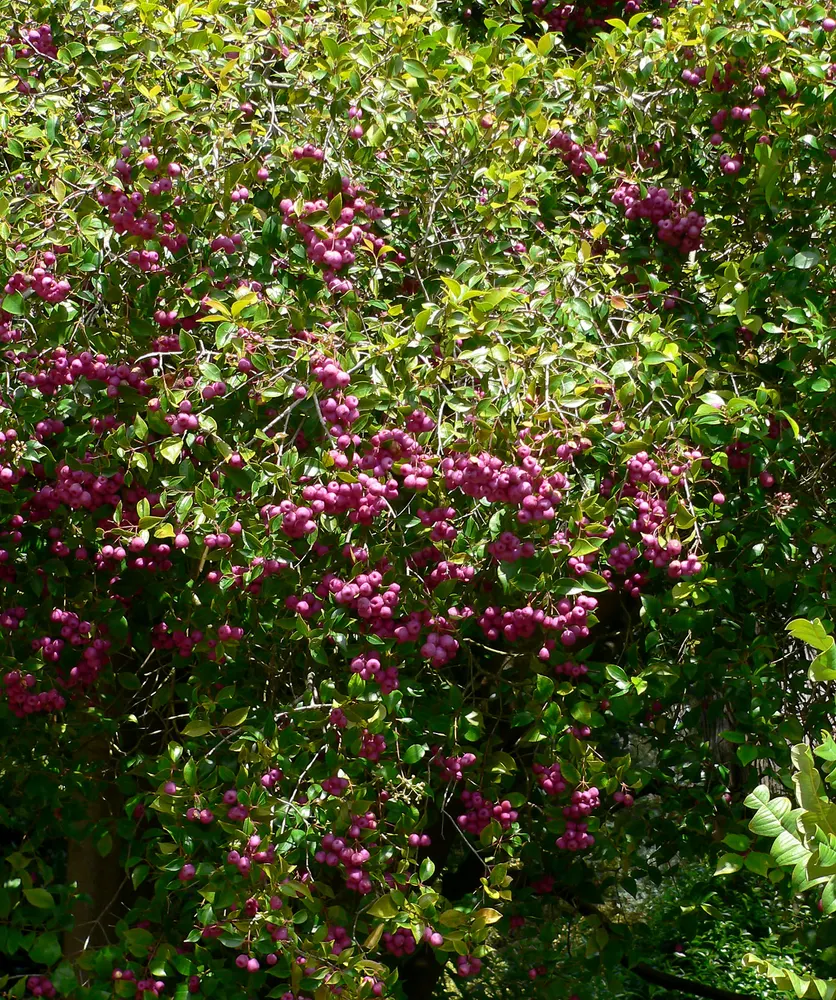
Photo: Stan Shebs, CC BY-SA 3.0 (via Wikimedia Commons)
Lilly Pilly
Acmena smithii
Also known as Native Myrtle, Creek Lilly Pilly, Syzygium smithii, Eugenia smithii
Key benefits
✦Traditional uses
✦Long before it became a fixture of suburban hedges, lilly pilly was a bush tucker staple for Aboriginal communities along Australia's east coast, who gathered the tart, faintly spicy berries straight from the branch or crushed them into a refreshing drink. The fruit was valued as a reliable seasonal food source in rainforest country, ripening in loose clusters of pink, purple, or white berries each autumn. Colonial settlers later adopted the fruit for jams and sauces, drawn to its clove-like bite and rosy color. Its main legacy today is still that of a generous, low-fuss food tree rather than a medicine cabinet herb.
How to grow & use it
✦The full apothecary for Lilly Pilly
Traditional remedies and step-by-step preparations, a complete growing guide, and how to harvest, dry, and store it, all unlocked with HerbLens Unlimited.
- ✦Remedies & preparations
- ✦ Growing guide
- ✦Harvest & storage
From under $6 a month. Free plant identifications always included.
- ✦Lemon Myrtle
- ✦Finger Lime
- ✦Davidson's Plum
- ✦Riberry
- ✦Cranberry
“For the hedge that quietly hands you jam-worthy fruit every autumn.”
Many of Sydney's clipped suburban hedges are actually lilly pilly trees left in their wild, fruit-bearing habit, they only became famous as tidy screening shrubs once nurseries began selecting tight, small-leafed varieties in the twentieth century.
Lilly pilly fruit is a safe, traditional bush food, but correctly identify it before eating wild fruit and skip the leaves and unripe fruit.