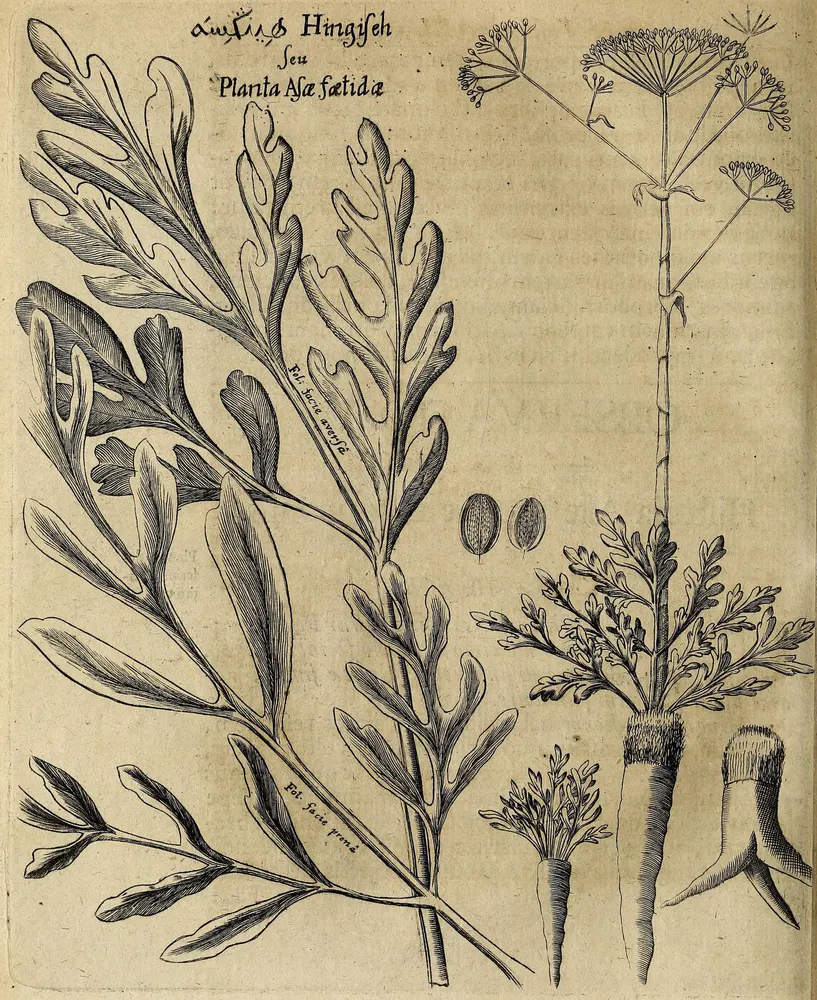
Photo: Engelbert Kaempfer, Public domain (via Wikimedia Commons)
Asafoetida
Ferula assa-foetida
Also known as Hing, Devil's Dung, Stinking Gum, Food of the Gods, Ferula assafoetida
Key benefits
✦Traditional uses
✦Long before it became a pantry staple, asafoetida was treasured medicine along the trade routes of Persia and India. Ayurvedic tradition has used the resin for centuries to calm digestive upset, flatulence, and colicky discomfort after heavy meals, often stirred into warm water or ghee. In folk practice across South Asia and the Middle East, it was also traditionally used to ease coughs, bronchitis, and other respiratory troubles, rubbed onto the chest or taken in small warmed doses. In the kitchen, a single pinch fried in hot oil became the traditional stand-in for onion and garlic in Jain and other cooking traditions that avoid those alliums, releasing a savory, almost meaty aroma entirely unlike its raw, pungent smell.
How to grow & use it
✦The full apothecary for Asafoetida
Traditional remedies and step-by-step preparations, a complete growing guide, and how to harvest, dry, and store it, all unlocked with HerbLens Unlimited.
- ✦Remedies & preparations
- ✦ Growing guide
- ✦Harvest & storage
From under $6 a month. Free plant identifications always included.
- ✦Cumin
- ✦Turmeric
- ✦Fresh Ginger
- ✦Onion powder
- ✦Garlic powder
“When a dish calls for the savor of onion and garlic, but neither can be spared.”
When Alexander the Great's soldiers marched home through Afghanistan, they carried asafoetida back to the Mediterranean as a stand-in for silphium, a beloved seasoning and medicine so prized in the ancient world that it was eventually harvested into extinction.
Asafoetida can cause allergic skin reactions and has mild blood-thinning activity, so it should be avoided by anyone on blood-thinning medication or with a bleeding disorder. It has also traditionally been avoided during pregnancy and is not recommended for infants.