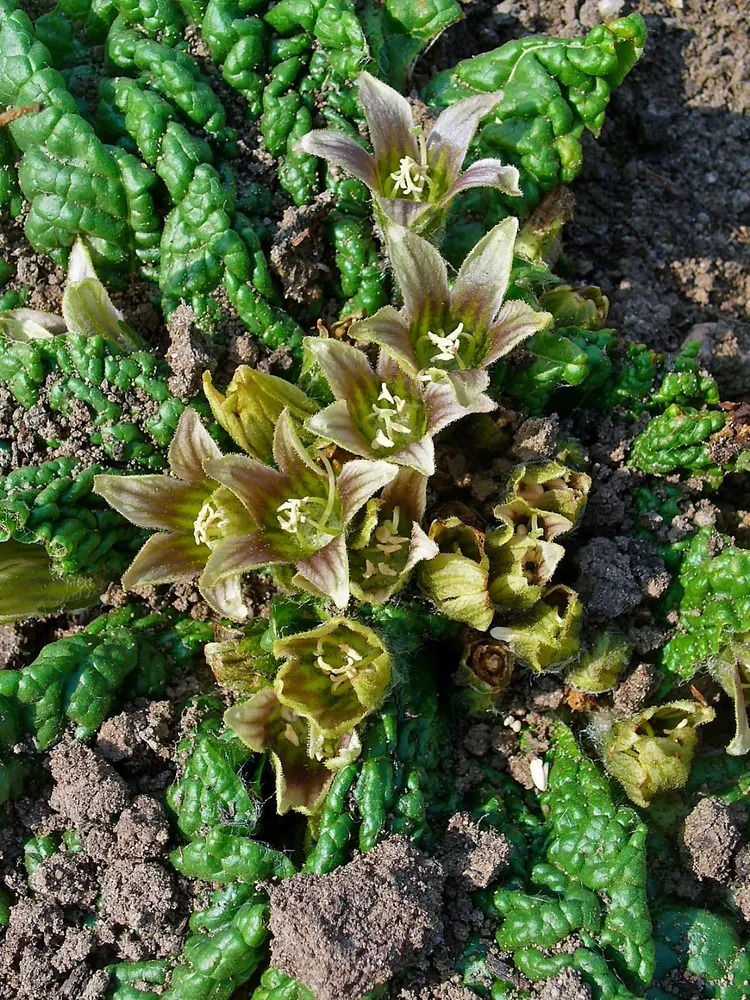
Photo: H. Zell, CC BY-SA 3.0 (via Wikimedia Commons)
Mandrake
Mandragora officinarum
Also known as Devil's Apple, Satan's Apple, Womandrake, Gallows Herb, Sorcerer's Root
Key benefits
✦Traditional uses
✦Mandrake carries one of the oldest and strangest reputations of any plant in the Western herbal record. Its forked, man-shaped root made it a figure of dread and wonder for thousands of years, said in medieval legend to let out a fatal scream when pulled from the earth, which is why old herbals describe tying a dog to the plant to do the pulling instead. Ancient Greek and Roman writers, including Dioscorides, described mandrake wine being given before surgery or cautery as one of the earliest known anesthetics, and it appears in the Hebrew Bible as the dudaim gathered by Leah, long associated with fertility folklore. By the Middle Ages it had become a fixture of witchcraft legend, believed to grow beneath gallows from the fluids of hanged men and to serve as an ingredient in the mythical flying ointments of witches. None of these historical uses are things anyone should attempt today; mandrake earned its legendary status precisely because it was so dangerous to handle.
How to grow & use it
✦The full apothecary for Mandrake
Traditional remedies and step-by-step preparations, a complete growing guide, and how to harvest, dry, and store it, all unlocked with HerbLens Unlimited.
- ✦Remedies & preparations
- ✦ Growing guide
- ✦Harvest & storage
From under $6 a month. Free plant identifications always included.
“A plant for the pages of a herbal history, not the medicine cabinet.”
The mandrake root's tendency to split into two 'legs' as it grows gave rise to centuries of folklore that it was a little man trapped in the earth, complete with legends that its shriek when uprooted could kill or drive a person mad, a superstition still echoed in modern fiction today.
Mandrake is genuinely toxic and should never be ingested, brewed, or applied in any home preparation. Every part of the plant, especially the root, contains potent tropane alkaloids including atropine, hyoscyamine, and scopolamine, the same class of compounds found in deadly nightshade and henbane. Even small amounts can cause dilated pupils, dry mouth, rapid heartbeat, agitation, vivid hallucinations, delirium, seizures, coma, and death, and historical accounts are full of fatal and near-fatal poisonings from mandrake preparations. It is not appropriate for pregnant or breastfeeding people, children, or pets under any circumstances, and it can dangerously interact with other medications affecting the heart or nervous system. This entry is offered for its remarkable botanical and folklore history only. If you or someone else has ingested any part of this plant, contact emergency services or a poison control center immediately, and always consult a qualified healthcare professional or toxicologist rather than attempting any home use.