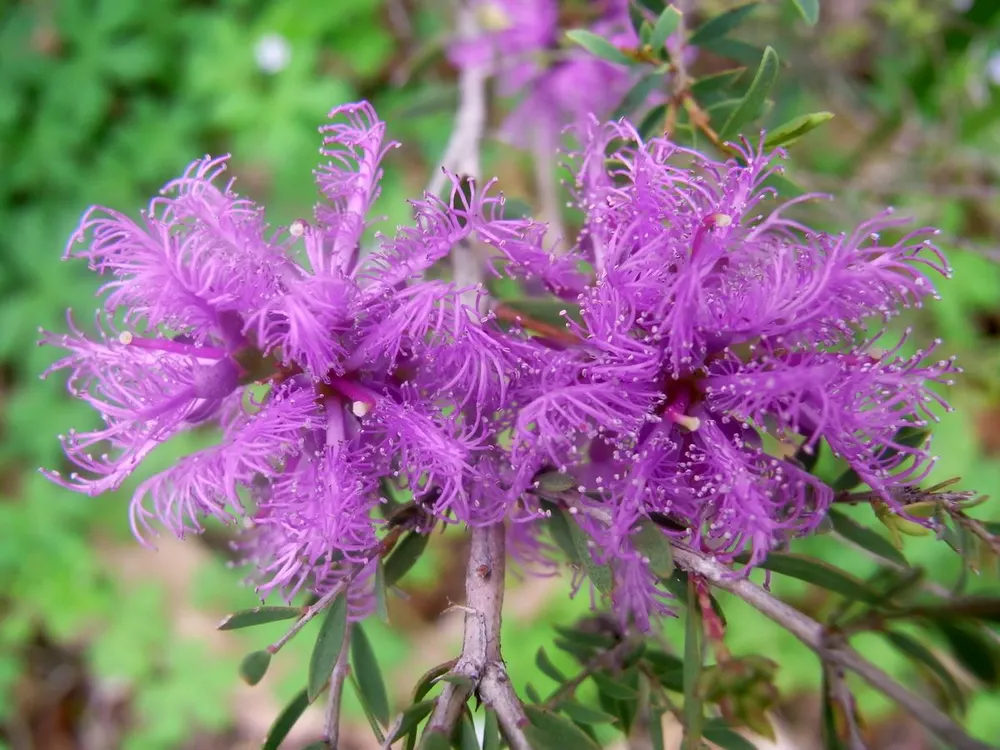
Photo: Poyt448 Peter Woodard, Public domain (via Wikimedia Commons)
Thyme Honey-myrtle
Melaleuca thymifolia
Also known as Thyme-leaved Honey-myrtle, Thyme-leaved Paperbark, Fringed Honey-myrtle
Key benefits
✦Traditional uses
✦Thyme Honey-myrtle belongs to the same broad Melaleuca family that gave Aboriginal Australians paperbark for shelter and wrapping food, and aromatic leaves that were crushed and inhaled to ease congestion long before Europeans arrived. This particular species, though, has never carried the same documented history of medicinal or culinary use as its more famous relatives like tea tree. Its story today is really a garden one: a hardy, honeyeater-loving shrub valued for the color and life it brings to a damp corner of the yard.
How to grow & use it
✦The full apothecary for Thyme Honey-myrtle
Traditional remedies and step-by-step preparations, a complete growing guide, and how to harvest, dry, and store it, all unlocked with HerbLens Unlimited.
- ✦Remedies & preparations
- ✦ Growing guide
- ✦Harvest & storage
From under $6 a month. Free plant identifications always included.
- ✦Callistemon (bottlebrush)
- ✦Leptospermum (tea tree)
- ✦Baeckea
- ✦Melaleuca linariifolia
- ✦Callistemon species
“When you want a low green hedge that hums with honeyeaters and bursts into fringed pink lanterns all summer long.”
Unlike most of its cream and white-flowered cousins, Thyme Honey-myrtle wears a mauve-pink bloom with petals so finely fringed they look almost feathered, which is exactly why Australian bonsai growers have long prized it for training into miniature, blossom-covered trees.
This is a garden and wildlife plant, not a food or tea herb, and should not be eaten or brewed. Like other Melaleuca species, its essential oils can irritate skin and mucous membranes and are unsafe to swallow.