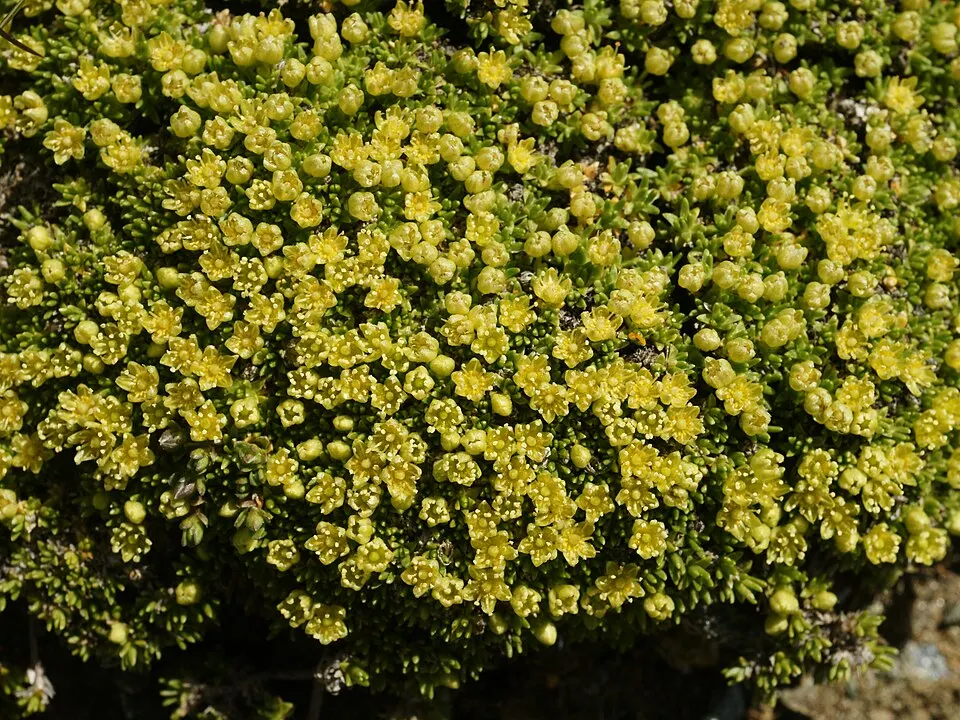
Photo: (Hans Hillewaert), CC BY-SA 3.0 (via Wikimedia Commons)
Cyphel
Minuartia sedoides
Also known as Mossy Cyphel, Cyphel Sandwort, Mountain Cyphel
Traditional uses
✦Minuartia sedoides carries no known folk medicine or kitchen history. It is a true mountain specialist, tucked onto windswept ridges and rocky summits in places like the Scottish Highlands, the Alps, and other high ranges of Europe, where it survives conditions that would flatten almost anything else. What draws people to it today is not remedy but wonder, its tight, moss-like cushions of tiny leaves hug the rock so closely that early botanists mistook it for a true moss before its small starry flowers gave it away. For alpine garden enthusiasts and rock gardeners, it has become a quietly prized curiosity, a living reminder of how plants adapt to the harshest, thinnest soils on earth.
How to grow & use it
✦The full apothecary for Cyphel
Traditional remedies and step-by-step preparations, a complete growing guide, and how to harvest, dry, and store it, all unlocked with HerbLens Unlimited.
- ✦Remedies & preparations
- ✦ Growing guide
- ✦Harvest & storage
From under $6 a month. Free plant identifications always included.
- ✦Saxifraga (saxifrage species)
- ✦Dianthus alpinus (alpine pink)
- ✦Sempervivum (houseleek)
“For the gardener who loves the plants that thrive where almost nothing else dares to grow.”
Cyphel grows so slowly and so tightly against the rock that a single cushion may take many years to widen by just a few centimeters, some specimens on old Scottish summits are thought to be decades old, quietly outlasting the harsh weather that shapes them.
This alpine plant has no documented food or medicinal use and no known toxicity data, so it should not be eaten. It is also a slow-growing, site-limited alpine specialist and should never be picked in the wild.