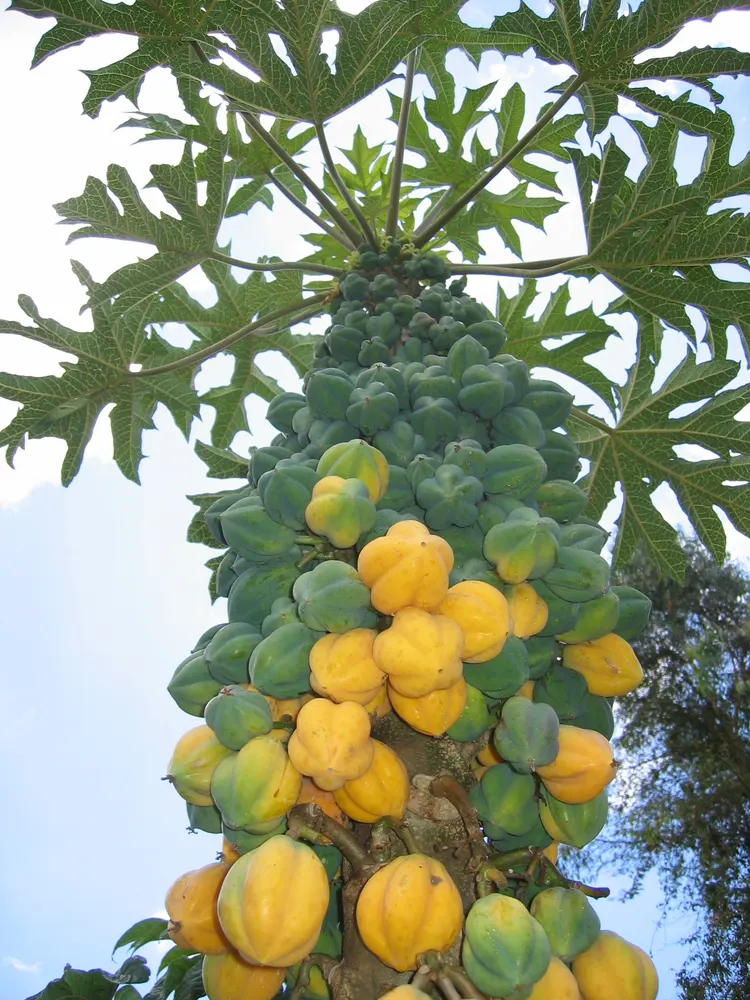
Photo: Michael Hermann, CC BY-SA 3.0 (via Wikimedia Commons)
Mountain Papaya (Chamburo)
Vasconcellea pubescens
Also known as Chamburo, Papayuela, Toronche, Highland Papaya, Siglalón
Key benefits
✦Traditional uses
✦In the cool Andean valleys of Ecuador, Colombia, Peru, and Chile, mountain papaya has long been the highland answer to a fruit that could never survive there in its lowland form. Families cooked the fruit down into thick, honeyed syrups called jarabe de chamburo, kept in the cupboard for the first sign of a winter cough or scratchy throat. Its flesh, rich in the same enzyme family found in tropical papaya, was also stewed into compotes and preserves believed to settle a heavy stomach after a big meal. Because the raw fruit is sharply astringent, tradition always called for cooking it first, turning what nature made puckering into something warm, sweet, and comforting.
How to grow & use it
✦The full apothecary for Mountain Papaya (Chamburo)
Traditional remedies and step-by-step preparations, a complete growing guide, and how to harvest, dry, and store it, all unlocked with HerbLens Unlimited.
- ✦Remedies & preparations
- ✦ Growing guide
- ✦Harvest & storage
From under $6 a month. Free plant identifications always included.
- ✦Honey
- ✦Cinnamon
- ✦Ginger
- ✦Papaya
- ✦Pineapple
“For the highland garden that still wants a taste of papaya where papaya itself refuses to grow.”
Mountain papaya is one of the very few members of the papaya family that shrugs off cool mountain nights and even light frost, allowing it to fruit at elevations where its tropical cousin, Carica papaya, would simply give up.
Like papaya, mountain papaya produces a milky latex, especially in the unripe fruit and skin, that can irritate skin and is removed by cooking before eating. Those with a latex or papaya allergy should be cautious, and Andean tradition avoids the unripe fruit during pregnancy.