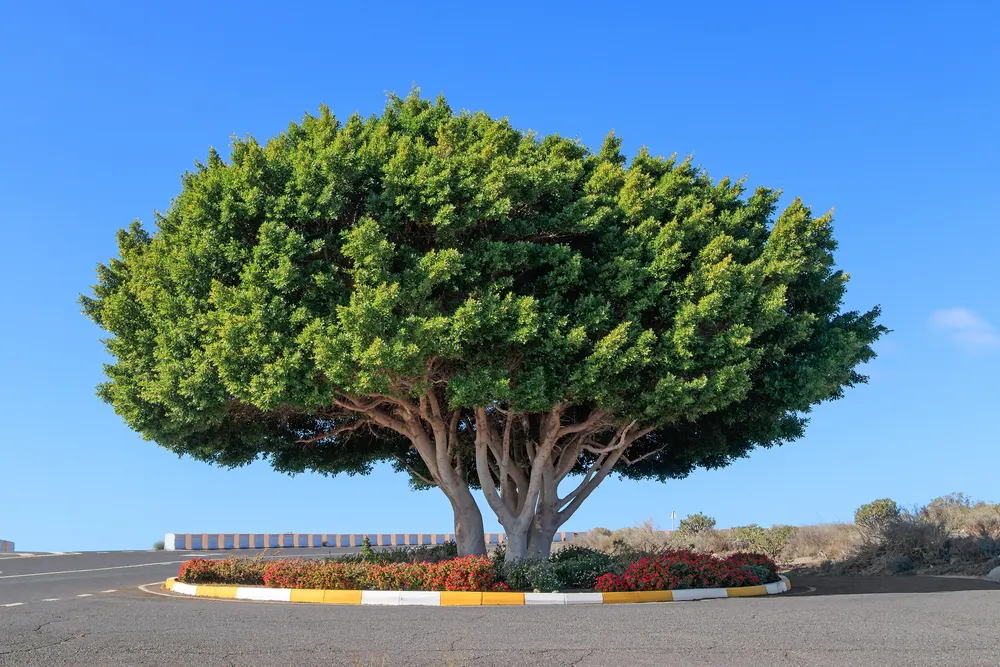
Photo: H. Zell, CC BY-SA 3.0 (via Wikimedia Commons)
Chinese Banyan
Ficus microcarpa
Also known as Indian Laurel Fig, Malayan Banyan, Curtain Fig, Ginseng Ficus, Laurel Fig
Key benefits
✦Traditional uses
✦Long before it became a fixture of office lobbies and bonsai benches, Ficus microcarpa held a quiet place in the folk medicine of southern China and Southeast Asia, where the bark and aerial roots were simmered into simple decoctions for fevers, coughs, and the aching joints of rheumatism. Coastal villages also valued the tree simply as shelter, its sprawling canopy a natural gathering spot, so its role in daily life grew to include both body and community. Healers in these traditions treated it as a humble, everyday remedy rather than a rare or ceremonial one, something any household near a banyan could turn to.
How to grow & use it
✦The full apothecary for Chinese Banyan
Traditional remedies and step-by-step preparations, a complete growing guide, and how to harvest, dry, and store it, all unlocked with HerbLens Unlimited.
- ✦Remedies & preparations
- ✦ Growing guide
- ✦Harvest & storage
From under $6 a month. Free plant identifications always included.
- ✦Mulberry leaf
- ✦Chrysanthemum flower
- ✦Licorice root
- ✦Mulberry leaf
- ✦Honeysuckle flower
“For the gardener drawn to living sculpture, roots poured like stone, patience rewarded in slow, tangled beauty.”
Ficus microcarpa is a true strangler fig: a bird or bat drops a seed high in the branches of another tree, and the fig sends fine roots down to the ground, thickening year by year until they encase and can eventually outlive the host it once depended on.
The milky sap of Chinese banyan can irritate skin and eyes and may trigger a reaction in people with a latex or fig allergy. It is also toxic to cats and dogs if chewed, so keep pets away from cut stems and leaves.