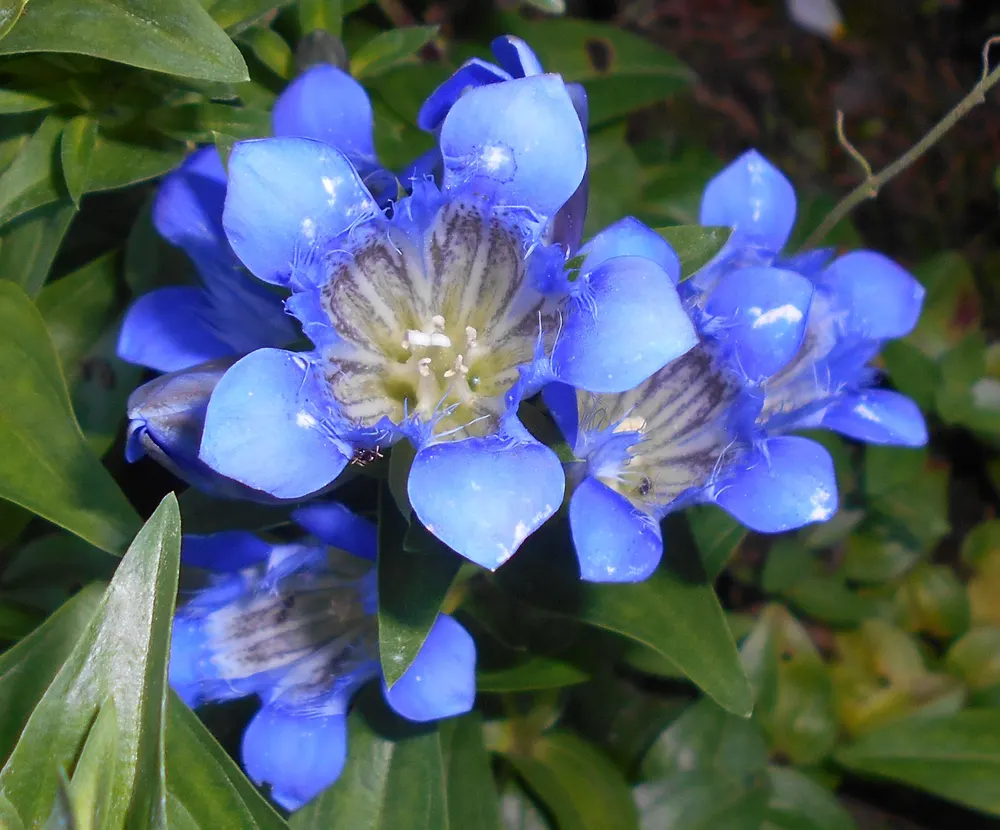
Photo: Salicyna, CC BY-SA 4.0 (via Wikimedia Commons)
Crested Gentian
Gentiana septemfida
Also known as Summer Gentian, Seven-lobed Gentian, Crested Dwarf Gentian
Key benefits
✦Traditional uses
✦Gentiana septemfida comes down from the high meadows and scree slopes of the Caucasus, Turkey, and Iran, where its trumpets of deep, almost impossible blue have long made it a favorite dug up and carried into cottage and monastery gardens. The wider gentian family carries a famous medicinal legacy, especially the great yellow gentian, Gentiana lutea, whose bitter root has flavored digestive tonics and liqueurs across Europe since antiquity. This particular species, though, has traveled a gentler road. It was prized by alpine plant collectors and rock gardeners rather than herbalists, valued for the sheer saturation of its color and its willingness to bloom reliably where other alpines struggle. Its Latin name, septemfida, nods to the little fringed appendages that split the corolla into extra lobes, a detail that made collectors take notice long before it made it into any apothecary.
How to grow & use it
✦The full apothecary for Crested Gentian
Traditional remedies and step-by-step preparations, a complete growing guide, and how to harvest, dry, and store it, all unlocked with HerbLens Unlimited.
- ✦Remedies & preparations
- ✦ Growing guide
- ✦Harvest & storage
From under $6 a month. Free plant identifications always included.
- ✦Alpine phlox
- ✦Saxifrage
- ✦Dwarf asters
- ✦Gentiana lutea (for herbal bitters traditions, which this ornamental species was never used for)
“For a patch of sky pinned to the ground in the heat of summer.”
Look closely between the five main petal lobes and you will find smaller, fringed extra lobes tucked in between them, a feature that gives the flower a pleated, crested look up close and inspired both its species name, septemfida, and its common name, crested gentian.
Grown as an ornamental alpine plant rather than a food or medicine, and it is easily confused with Gentiana lutea (great yellow gentian), the species actually used in bitters; do not eat it without expert identification.