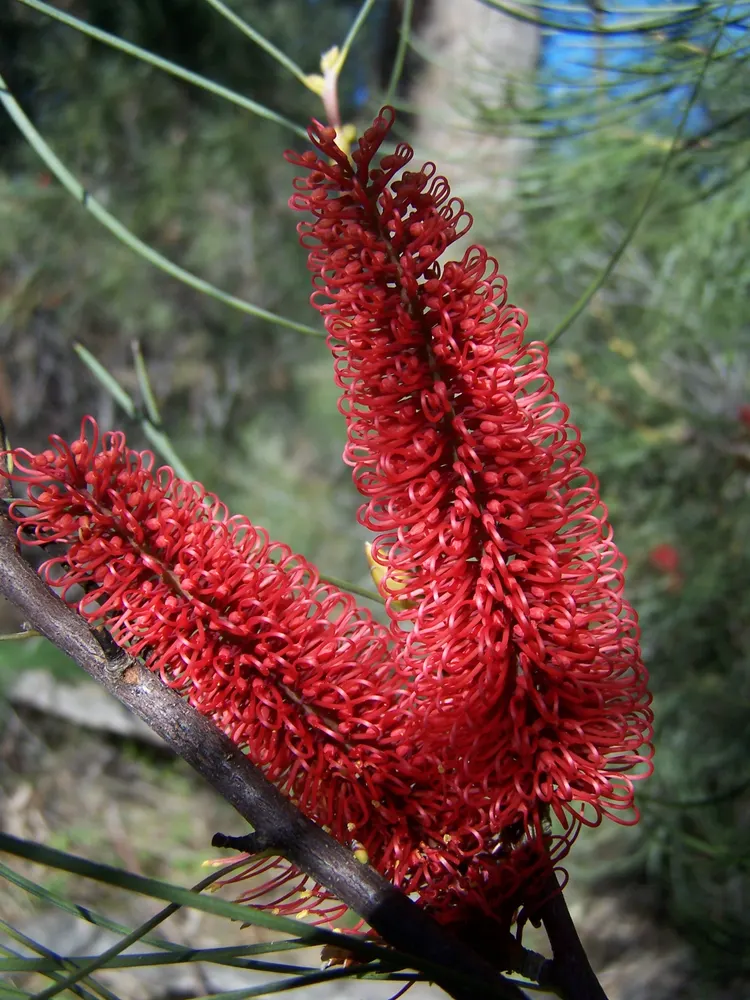
Photo: Gnangarra, CC BY 2.5 au (via Wikimedia Commons)
Red Pokers
Hakea bucculenta
Also known as Red Pokers Hakea, Firewood Banksia's Cousin (colloquial, informal)
Key benefits
✦Traditional uses
✦Red pokers is native to the red earth and spinifex country of inland Western Australia, where its blazing flower spikes have long marked the turn toward the cooler months. It belongs to the Proteaceae, a family Aboriginal Australians drew on for millennia, tough hakea wood shaped into tools and weapons, and flowers rich with nectar that could be sucked straight from the blossom for a burst of sweetness. Red pokers itself is treasured today less as a bushland provider and more as a beacon for wildlife, and as a favorite of gardeners and florists drawn to a color that seems lit from within.
How to grow & use it
✦The full apothecary for Red Pokers
Traditional remedies and step-by-step preparations, a complete growing guide, and how to harvest, dry, and store it, all unlocked with HerbLens Unlimited.
- ✦Remedies & preparations
- ✦ Growing guide
- ✦Harvest & storage
From under $6 a month. Free plant identifications always included.
- ✦Grevillea
- ✦Kangaroo Paw (Anigozanthos)
- ✦Banksia
- ✦Hakea francisiana
- ✦Hakea multilineata
“For gardens that ache for a torch of color just when the rest of the world has gone gray with winter.”
Like many of its Hakea relatives, red pokers produces hard, woody seed pods that stay sealed on the plant for years, only cracking open to release their seeds after the heat of a bushfire passes through, a strategy that lets the species reseed itself right when competing vegetation has been cleared away.
Red pokers is grown as an ornamental and cut-flower plant, not as a food or medicinal herb, and no established tradition of internal use exists for this species, so it should not be ingested. Its narrow leaves can have firm, pointed tips typical of many hakeas, handle pruned material with care and keep cut stems away from small children and pets who might chew on them. As with any plant outside your normal diet, do not eat any part of it, and speak with a qualified horticulturist or health professional before using any unfamiliar plant medicinally.