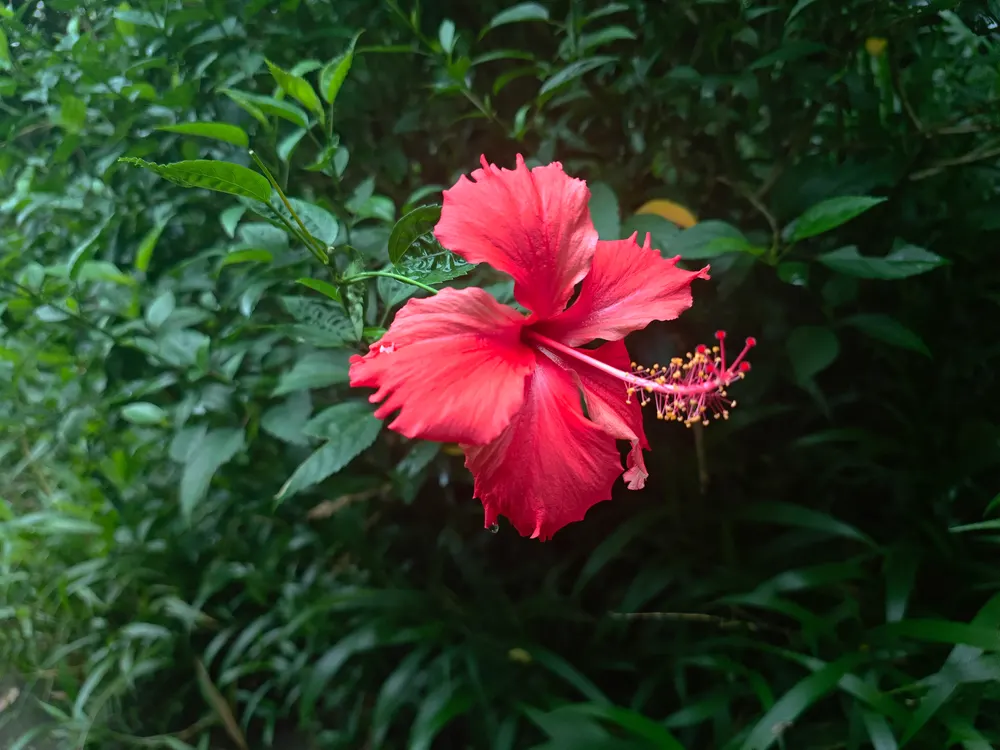
Photo: Yangchengu, CC BY 4.0 (via Wikimedia Commons)
Chinese Hibiscus
Hibiscus rosa-sinensis
Also known as Chinese Hibiscus, Shoeflower, Shoe Black Plant, China Rose, Rose of China
Key benefits
✦Traditional uses
✦Long before it became a fixture of tropical gardens and postcard beaches, Chinese hibiscus was already deeply woven into daily life across South and Southeast Asia. In India it is known as gudhal and offered at temple altars, while its flowers and leaves were traditionally pounded into pastes and simmered into oils to care for the hair and scalp, a practice still passed down in households today. In Malaysia the flame red bloom became the bunga raya, the national flower, and across the Pacific it grew so entwined with island life that a single tucked-behind-the-ear blossom came to signal everything from availability to celebration. Its silky petals were also historically rubbed on leather to bring up a shine, earning it the old folk name shoeflower.
How to grow & use it
✦The full apothecary for Chinese Hibiscus
Traditional remedies and step-by-step preparations, a complete growing guide, and how to harvest, dry, and store it, all unlocked with HerbLens Unlimited.
- ✦Remedies & preparations
- ✦ Growing guide
- ✦Harvest & storage
From under $6 a month. Free plant identifications always included.
- ✦Amla (Indian gooseberry)
- ✦Fenugreek
- ✦Coconut
- ✦Marshmallow root (for a similar soothing mucilage)
- ✦Roselle, Hibiscus sabdariffa (a related species more commonly used for tart infused teas)
“For a garden that blooms like it means it, and a bit of old-world hair care wisdom passed down through generations.”
Each Chinese hibiscus flower lives for only about a day, opening at dawn and wilting by nightfall, yet a healthy shrub sets so many buds in succession that it can look like it is blooming nonstop for months on end.
Traditionally used to influence menstruation and shown to have estrogenic effects in animal studies, so avoid internal use during pregnancy or while trying to conceive, and use caution with hormone-sensitive conditions.