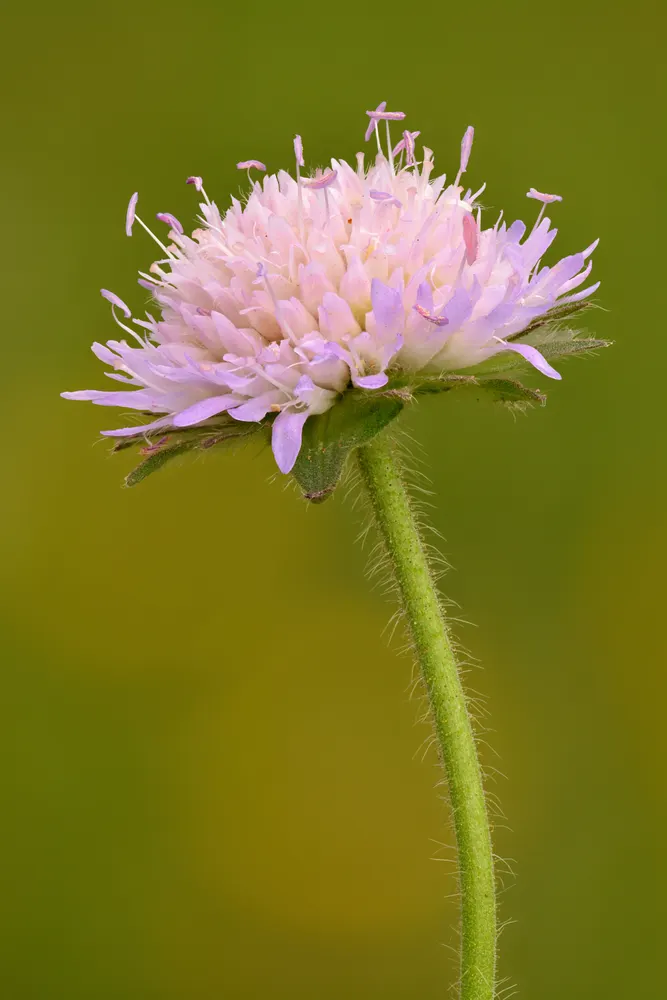
Photo: Ivar Leidus, CC BY-SA 4.0 (via Wikimedia Commons)
Field Scabious
Knautia arvensis
Also known as Gypsy Rose, Lady's Pincushion, Blue Buttons, Pincushion Flower
Key benefits
✦Traditional uses
✦Field Scabious earned its common name from one of its oldest jobs, easing the itch and irritation of scabies and other skin eruptions, back when country herbalists reached for whatever grew nearest at hand against the miseries of the skin. Its leaves and flowering tops were also steeped into tea for coughs, sore throats, and bronchial complaints, valued for a mild astringency that felt soothing going down. Herb-wives and cottage gardeners gathered it from hay meadows for generations, crushing the fresh leaves into simple poultices for grazes and minor cuts. Though it never rose to the fame of echinacea or chamomile, it held a quiet, dependable place in the European folk medicine chest.
How to grow & use it
✦The full apothecary for Field Scabious
Traditional remedies and step-by-step preparations, a complete growing guide, and how to harvest, dry, and store it, all unlocked with HerbLens Unlimited.
- ✦Remedies & preparations
- ✦ Growing guide
- ✦Harvest & storage
From under $6 a month. Free plant identifications always included.
- ✦Plantain
- ✦Chamomile
- ✦Elderflower
- ✦Mullein leaf
- ✦Marshmallow leaf
“For a meadow humming with bees and a gentle old-fashioned tea for a scratchy throat.”
The name scabious traces back to the Latin scabies, a nod to the plant's old reputation as a folk remedy for that itchy skin condition, while its genus name Knautia honors Christoph Knaut, a seventeenth-century German botanist and physician.
Field scabious isn't known to be toxic; its pollen may bother those prone to plant allergies.