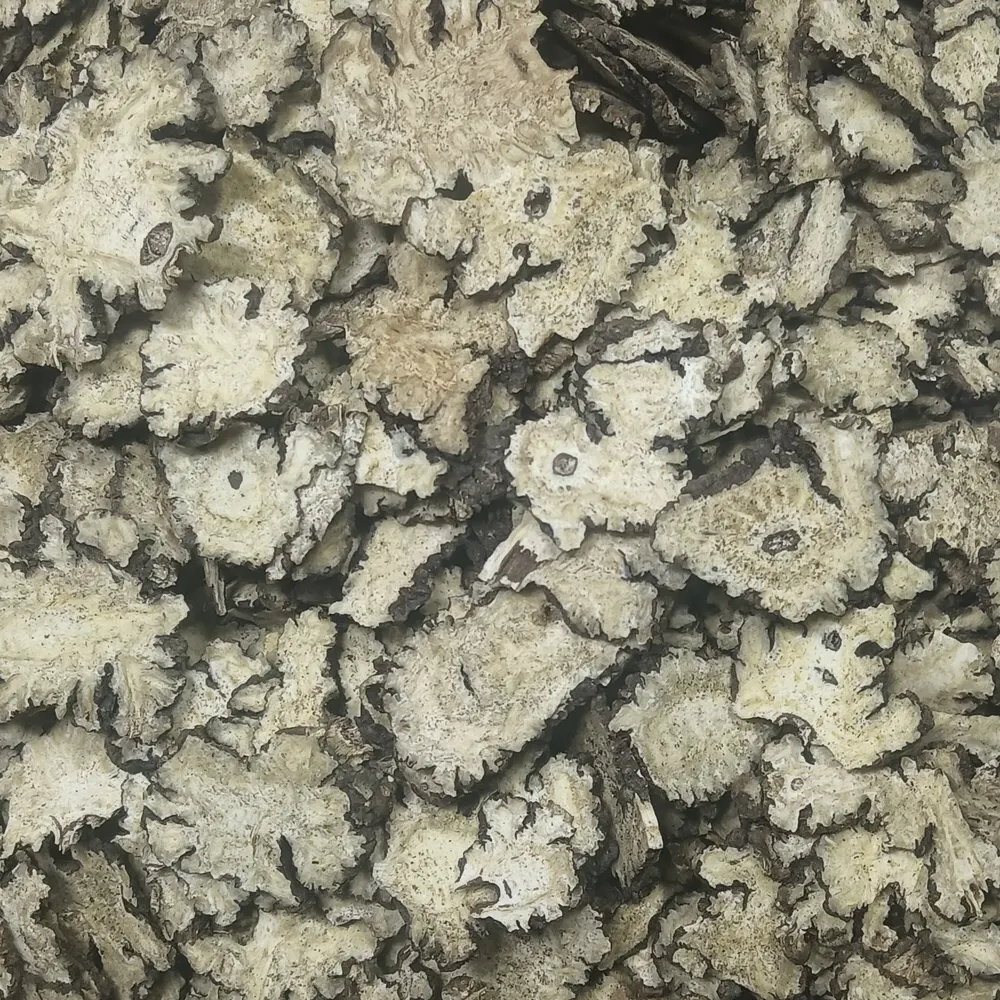
Photo: Fumikas Sagisavas, CC0 (via Wikimedia Commons)
Sichuan Lovage
Ligusticum chuanxiong
Also known as Chuan Xiong, Sichuan Lovage Root, Szechuan Lovage, Rhizoma Chuanxiong
Key benefits
✦Traditional uses
✦Chuan xiong takes its name from the very province, Sichuan, where farmers have cultivated it in terraced fields for well over a thousand years. In traditional Chinese medicine it is counted among the essential herbs for what practitioners called invigorating the blood, prized for gently warming and moving circulation that felt stuck or sluggish. Generations of practitioners reached for its aromatic rhizome to address head tension and the discomforts that came with a woman's monthly cycle, almost always weaving it into a larger formula alongside companion roots rather than using it alone. Its bold, musky fragrance made it easy to recognize in an apothecary's drawer long before its chemistry was ever studied.
How to grow & use it
✦The full apothecary for Sichuan Lovage
Traditional remedies and step-by-step preparations, a complete growing guide, and how to harvest, dry, and store it, all unlocked with HerbLens Unlimited.
- ✦Remedies & preparations
- ✦ Growing guide
- ✦Harvest & storage
From under $6 a month. Free plant identifications always included.
- ✦Dong Quai (Angelica sinensis)
- ✦Chrysanthemum
- ✦White Peony Root (Bai Shao)
- ✦Dong Quai
- ✦Osha Root (Ligusticum porteri)
“For the ache of a tense, heavy head and a longing for circulation that flows steady and warm again.”
Chuan xiong has a wild North American cousin, osha root (Ligusticum porteri), which grows high in the Rocky Mountains and was used in strikingly similar ways by Indigenous healers, prized for its warming, aromatic root long before the two continents ever compared notes.
Chuan xiong is traditionally avoided during pregnancy and by those with heavy bleeding or bleeding disorders, since its blood-moving action may add to the effect of blood thinners like warfarin or aspirin. It is traditionally used in balanced formulas rather than alone.