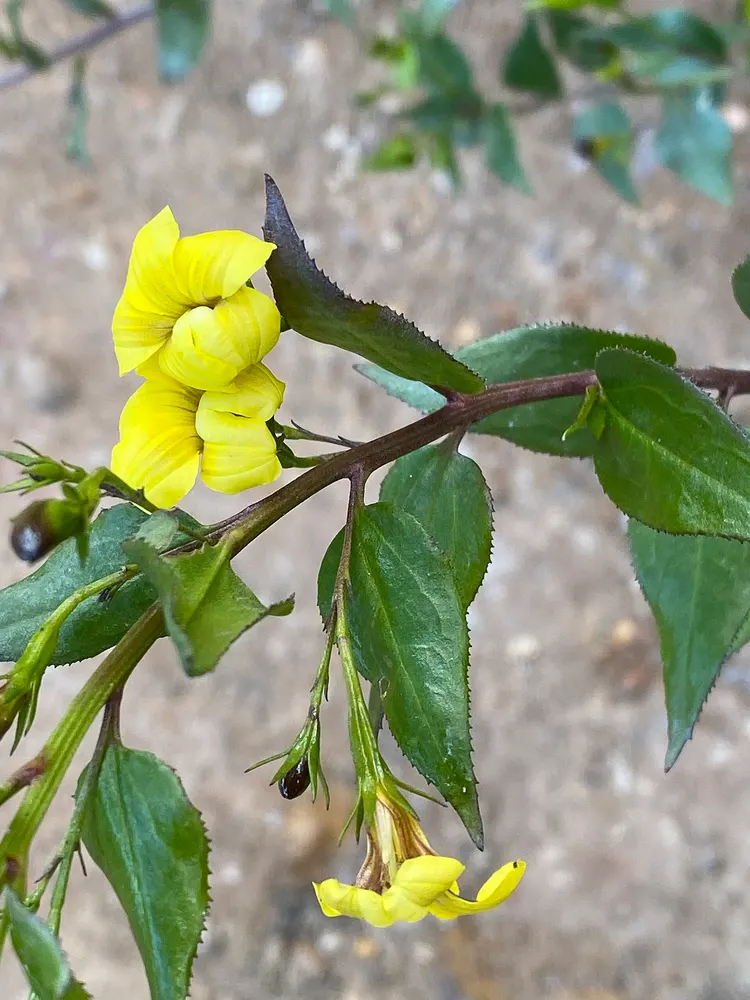
Photo: Allthingsnative, CC BY-SA 4.0 (via Wikimedia Commons)
Hop Goodenia
Goodenia ovata
Also known as Hop Native Primrose, Forest Goodenia
Key benefits
✦Traditional uses
✦Long before European settlement, Aboriginal Australians in Goodenia ovata's home range knew the plant well, and its soft, faintly sticky leaves found a place in traditional skin care, crushed or steeped into a wash for irritated skin. Early colonial settlers gave the plant its common name after discovering that its bitter leaves could stand in for true hops when brewing beer far from any hop yard, a bit of resourceful bush ingenuity that has stuck to the plant's name ever since. Today it is better known to Australian gardeners as a forgiving, fast-growing native that fills shady corners with gold and keeps the local bees busy.
How to grow & use it
✦The full apothecary for Hop Goodenia
Traditional remedies and step-by-step preparations, a complete growing guide, and how to harvest, dry, and store it, all unlocked with HerbLens Unlimited.
- ✦Remedies & preparations
- ✦ Growing guide
- ✦Harvest & storage
From under $6 a month. Free plant identifications always included.
- ✦Calendula
- ✦Tea tree (Melaleuca)
- ✦Plantain
- ✦Hops (Humulus lupulus)
- ✦Calendula
“For the shady garden corner that needs cheerful gold flowers and a hardy, no-fuss native.”
Goodenia ovata earned its common name from thirsty colonial brewers who, lacking true hops in early Australia, steeped its bitter leaves into their beer instead, a fact still baked into the plant's name today.
Hop Goodenia hasn't been closely studied and its traditional use is external rather than internal, so it shouldn't be taken by mouth. Pregnant or nursing women and anyone with sensitive skin should patch test before external use.