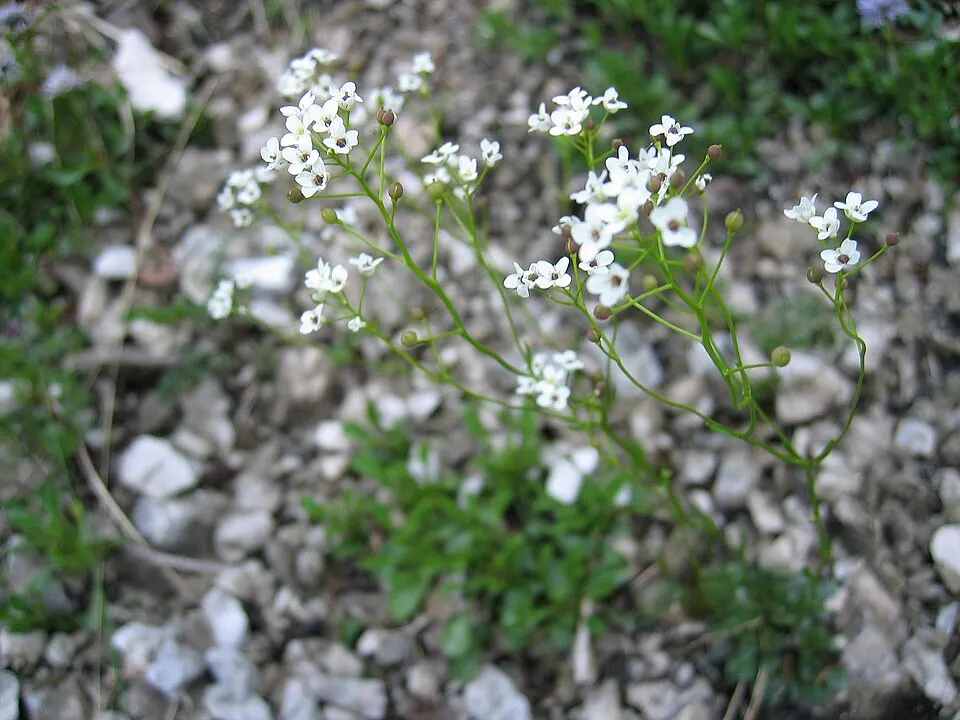
Photo: User:Tigerente, CC BY-SA 3.0 (via Wikimedia Commons)
Rock Kernera
Kernera saxatilis
Also known as Rock kernera, Alpine kernera, Kernera
Key benefits
✦Traditional uses
✦Kernera saxatilis is, first and foremost, a plant of high, stony places, the kind of small white-flowered cushion that alpine walkers step around without ever learning its name. It carries the name of Johann Simon von Kerner, an eighteenth-century German botanist, while saxatilis simply means rock-dwelling in Latin, a fittingly plain description of a fittingly plain little plant. Unlike many of its Brassicaceae cousins, such as mustard, cress, and horseradish, it has no real record of culinary or medicinal use in traditional herbalism. Its story instead belongs to rock gardeners and alpine botanists, who have long prized it for its toughness and its modest, unfussy charm rather than for any tonic or remedy.
How to grow & use it
✦The full apothecary for Rock Kernera
Traditional remedies and step-by-step preparations, a complete growing guide, and how to harvest, dry, and store it, all unlocked with HerbLens Unlimited.
- ✦Remedies & preparations
- ✦ Growing guide
- ✦Harvest & storage
From under $6 a month. Free plant identifications always included.
- ✦Saxifraga
- ✦Sempervivum (houseleek)
- ✦Dianthus (alpine pinks)
- ✦Arabis alpina (alpine rock cress)
- ✦Draba species
“You want a small, patient white flower for the coldest, stoniest corner of the garden, where little else agrees to grow.”
Kernera saxatilis belongs to the same botanical family as mustard, cabbage, and horseradish, yet it produces none of their peppery bite, staying instead a quiet, flavorless little rock dweller content to bloom where almost nothing else will take root.
Rock kernera has no history of food or medicinal use and no safety data, so it is grown only as an ornamental alpine plant, not eaten.