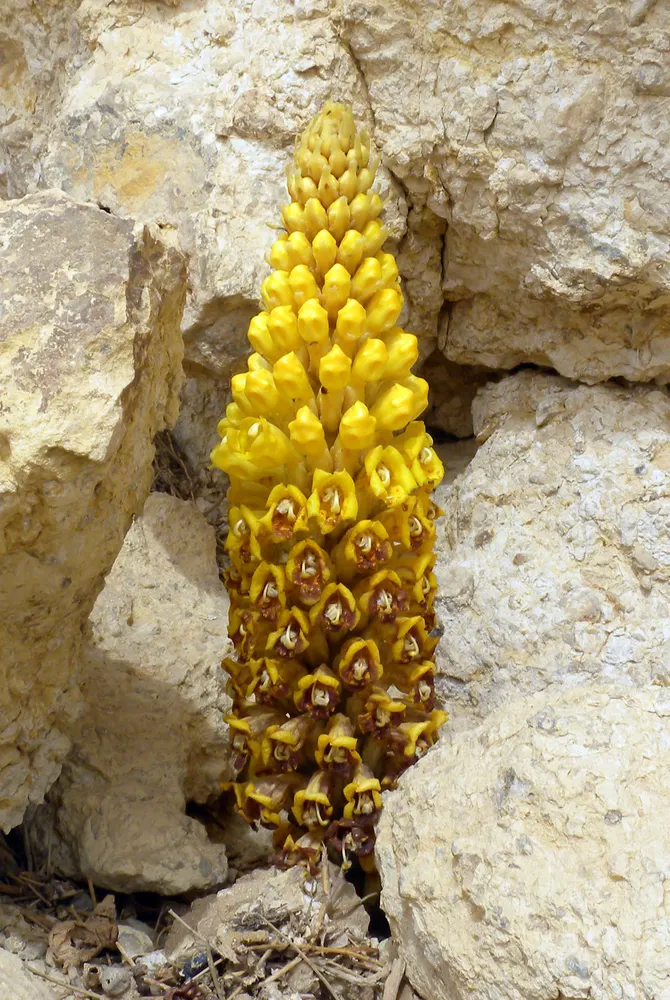
Photo: Wilson44691, CC BY-SA 3.0 (via Wikimedia Commons)
Desert Hyacinth
Cistanche tubulosa
Also known as Rou Cong Rong, Desert Broomrape, Fleshy Cistanche, Ginseng of the Desert
Key benefits
✦Traditional uses
✦For well over a thousand years, desert hyacinth has held a place among the most prized tonic herbs of Traditional Chinese Medicine, where it is known as rou cong rong. Traders along the Silk Road carried the dried stems across enormous distances, and it earned the nickname ginseng of the desert for how highly it was regarded as a restorative for the weary and depleted. Classical texts describe it as a warming tonic for the kidney and a gentle mover for the bowels, often reached for by those recovering strength after long illness or simple exhaustion. It was also traditionally valued as a support for healthy aging, prescribed to those feeling worn thin by years of hard living in an unforgiving climate.
How to grow & use it
✦The full apothecary for Desert Hyacinth
Traditional remedies and step-by-step preparations, a complete growing guide, and how to harvest, dry, and store it, all unlocked with HerbLens Unlimited.
- ✦Remedies & preparations
- ✦ Growing guide
- ✦Harvest & storage
From under $6 a month. Free plant identifications always included.
- ✦Goji Berry
- ✦Astragalus
- ✦Ginger
- ✦Astragalus Root
- ✦Eucommia Bark
“For the long, dry stretches of life, when steady, quiet strength feels harder to come by than it used to.”
Desert hyacinth has no green leaves and no chlorophyll at all. It survives entirely by tapping into the roots of a host shrub, most often the tamarisk tree, drawing water and nutrients from its neighbor for years underground before it ever sends a flowering stem up through the sand into daylight.
Desert hyacinth was traditionally avoided by anyone with loose stools or diarrhea, given its mild laxative nature, and set aside during pregnancy and breastfeeding. How it interacts with blood pressure or hormone medications isn't well studied, so don't combine it with prescription drugs without guidance.