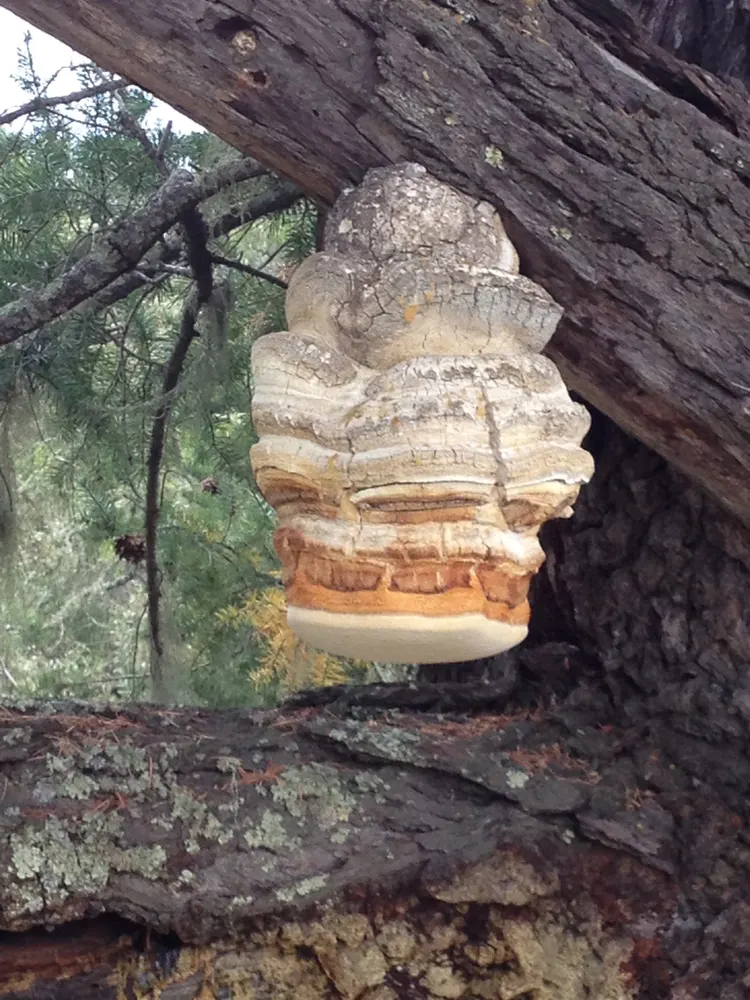
Photo: Steph Jarvis, CC BY-SA 3.0 (via Wikimedia Commons)
Agarikon
Laricifomes officinalis
Also known as Quinine Conk, Larch Bracket Fungus, Fomitopsis officinalis (synonym), Long Life Mushroom
Key benefits
✦Traditional uses
✦Agarikon is one of the oldest named medicinal fungi in Western record. The Greek physician Dioscorides described it nearly two thousand years ago as a remedy for consumption and other troubles of the chest, and it carried a reputation across Europe for centuries afterward as a treatment for coughs and lingering lung complaints. In the old growth forests of the Pacific Northwest, Indigenous peoples including coastal groups of what is now Alaska and British Columbia held the fungus in deep regard, sometimes carving its tough flesh into ceremonial and spirit figures. Because agarikon depends on ancient, undisturbed forest, it has become increasingly rare, and modern researchers have taken a renewed interest in the same conks that healers once traveled great distances to find.
Growing guide
✦Fresh to dried
✦Traditional preparations
✦Simple Agarikon Decoction
A traditional long simmer draws the woody conk's constituents into a warming, bitter tea, prepared much as one would a hard bracket fungus like reishi or chaga.
How it's made. Traditionally, 1 teaspoon of dried, chopped agarikon is simmered gently in 2 cups of water for 30 to 45 minutes, covered, then strained and sipped warm.
- ✦Reishi
- ✦Chaga
- ✦Thyme
- ✦Reishi
- ✦Turkey Tail
“For the quiet, patient strength of the ancient forest's own guardian, sought after since antiquity for the breath.”
Ancient agarikon conks, some estimated to be well over a century old, have been found tucked in the canopies of untouched old growth trees in the Pacific Northwest, and mycologists studying these same forest elders have screened them for activity against several viruses, a modern echo of the respiratory remedy Dioscorides wrote about two thousand years earlier.
Agarikon isn't known to be toxic, but it's poorly studied, so it's best avoided in pregnancy, nursing, and childhood, and used cautiously alongside immune-suppressing medication. Wild brackets should only be gathered by an experienced forager who can confirm the species.