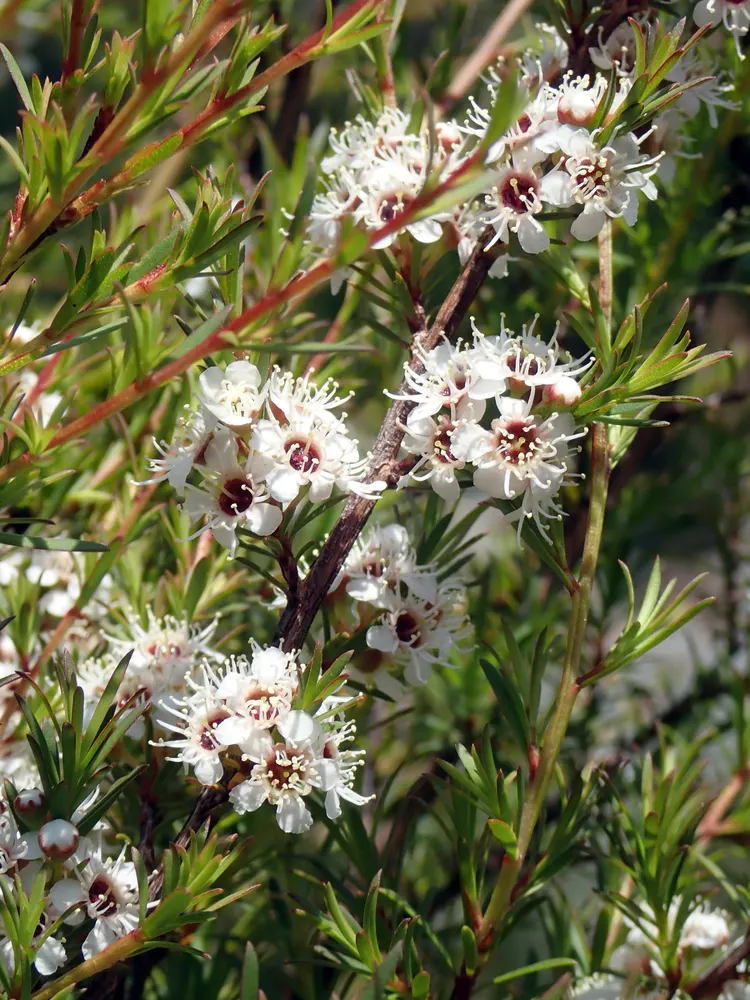
Photo: Peter de Lange, CC0 (via Wikimedia Commons)
Kanuka
Kunzea ericoides
Also known as White Tea Tree, Kanuka Tea Tree, Burgan, Whakau
Key benefits
✦Traditional uses
✦Long before Europeans arrived in Aotearoa New Zealand, Maori healers turned to kanuka as a steady, dependable ally in rongoa, the traditional system of plant medicine. The leaves and inner bark were steeped into infusions for aches and fevers, while steam rising from a pot of boiled kanuka leaves was breathed in to loosen chest colds. Its dense, straight-grained wood made it just as prized outside the medicine chest, shaped into tool handles, spears, and house frames. Today kanuka has stepped further into the light as its essential oil is studied and bottled for modern skin care, a gentle cousin to the better known manuka.
How to grow & use it
✦The full apothecary for Kanuka
Traditional remedies and step-by-step preparations, a complete growing guide, and how to harvest, dry, and store it, all unlocked with HerbLens Unlimited.
- ✦Remedies & preparations
- ✦ Growing guide
- ✦Harvest & storage
From under $6 a month. Free plant identifications always included.
- ✦Manuka
- ✦Lemon myrtle
- ✦Eucalyptus
- ✦Manuka
- ✦Tea tree
“For the quiet ritual of a warm steam or a gentle cup, when you want the forest's calm without the fuss.”
Kanuka and manuka grew side by side in Maori tradition and are still mixed up today, but a quick touch tells them apart: manuka foliage is sharp and prickly, while kanuka leaves are soft and feathery, earning it the old settler nickname white tea tree.
Kanuka essential oil is for external use only and should always be diluted before touching skin, since it can irritate undiluted. Do not take it internally, and patch test first if you are sensitive to tea tree, eucalyptus, or manuka.