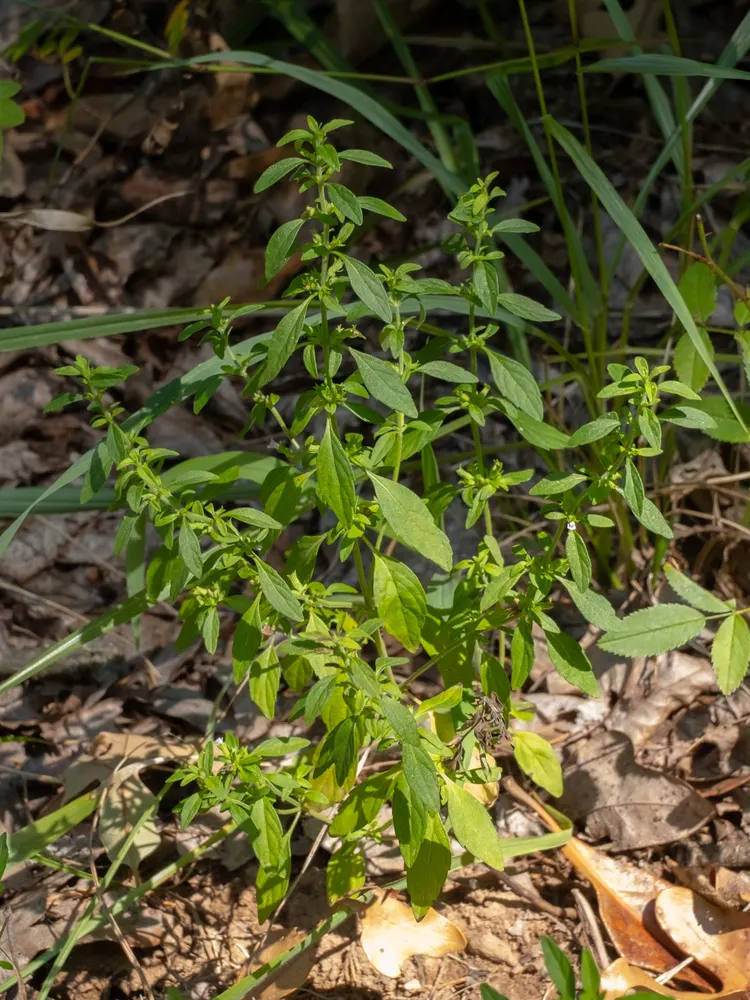
Photo: Alex Abair, CC BY 4.0 (via Wikimedia Commons)
American Pennyroyal
Hedeoma pulegioides
Also known as Mosquito Plant, Squawmint, Tickweed, American False Pennyroyal
Key benefits
✦Traditional uses
✦American pennyroyal grew up alongside colonial cabins and along dry New England roadsides, and settlers quickly noticed what Native peoples of the region already knew: its crushed, pungent leaves kept fleas, mosquitoes, and gnats at bay. Bundles of the dried herb were hung in doorways and rubbed on skin and clothing through buggy summer evenings, and it earned a place in almost every old dooryard garden for exactly this purpose. It also carried a long, troubled history as a folk remedy for bringing on delayed menstruation, a use now understood to be dangerous rather than gentle. Today it survives mostly as a fragrant curiosity in herb gardens and a name in old household manuals, valued for its scent and history rather than for anything taken by mouth.
How to grow & use it
✦The full apothecary for American Pennyroyal
Traditional remedies and step-by-step preparations, a complete growing guide, and how to harvest, dry, and store it, all unlocked with HerbLens Unlimited.
- ✦Remedies & preparations
- ✦ Growing guide
- ✦Harvest & storage
From under $6 a month. Free plant identifications always included.
- ✦Lavender
- ✦Wormwood
- ✦Southernwood
- ✦Spearmint (for a safe, fragrant mint in the garden)
- ✦Catnip (for gentle, traditional insect deterrence)
“The fragrant, thorny-minty herb that once hung by every colonial doorway to keep the mosquitoes at bay.”
The name pennyroyal is a corruption of the old Latin pulegium, meaning flea, because for centuries the plant's crushed leaves were rubbed on skin, bedding, and dog collars specifically to drive fleas away.
American pennyroyal contains pulegone, which is toxic to the liver even in small amounts. Ingesting the leaf, its tea, or especially its essential oil has caused severe liver failure, seizures, and death, including from historical misuse as an abortifacient. Do not ingest any part of this plant or its oil; keep it away from pregnant women, children, and pets, as the essential oil is a known cause of poisoning in cats and dogs.