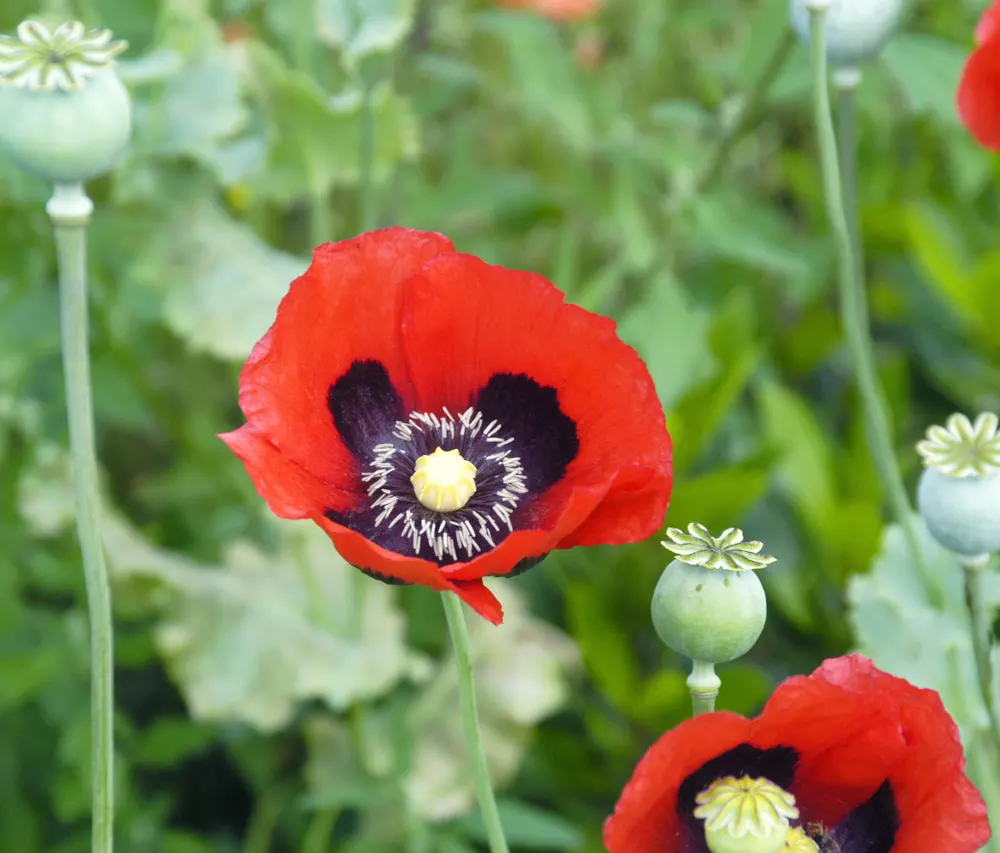
Photo: tanja niggendijker from apeldoorn, the netherlands, CC BY 2.0 (via Wikimedia Commons)
Opium Poppy
Papaver somniferum
Also known as Breadseed Poppy, Bread Poppy, Garden Poppy
Traditional uses
✦Papaver somniferum has one of the oldest and most fraught relationships with humankind of any cultivated plant, its latex having been gathered as opium since at least the Neolithic era in the Mediterranean basin, and later refined into morphine and codeine that reshaped medicine, war, and trade across continents. The ripe, dried seeds, which contain essentially none of the plant's narcotic alkaloids, have long been valued in kitchens from Central Europe to India for their nutty flavor in breads, cakes, and fillings, a tradition that is entirely separate from the plant's narcotic history. Its papery, tissue thin blooms in shades of white, pink, red, and deep purple have also made it a beloved, if quietly notorious, presence in cottage gardens for centuries.
How to grow & use it
✦The full apothecary for Opium Poppy
Traditional remedies and step-by-step preparations, a complete growing guide, and how to harvest, dry, and store it, all unlocked with HerbLens Unlimited.
- ✦Remedies & preparations
- ✦ Growing guide
- ✦Harvest & storage
From under $6 a month. Free plant identifications always included.
“A flower of breathtaking beauty and a long, difficult shadow, best admired for its papery petals and left at that.”
The species name somniferum means "sleep bringing" in Latin, a nod to the plant's ancient association with opium, but the tiny dried seeds sprinkled on a bagel contain essentially none of that narcotic compound, though eating poppy seed items can still cause a positive result on some drug tests.
Papaver somniferum is the source plant for opium, morphine, and codeine, and its unripe seed pods and latex contain powerful, addictive, and potentially fatal narcotic alkaloids; ingesting plant material beyond the mature, dried seed is dangerous and can cause severe respiratory depression, overdose, and death, and interacts perilously with alcohol, sedatives, and other opioids. Cultivation and processing of this plant for its narcotic content is illegal in many countries and tightly regulated in others, including the United States. Only the fully mature, dried seed, which contains negligible alkaloid content, is used as food; no part of this plant should ever be used for home remedies or self-treatment. This entry is offered for historical and botanical interest only, not as guidance for use, and anyone with questions about pain management, sleep, or opioid-related health concerns should speak with a qualified medical professional.