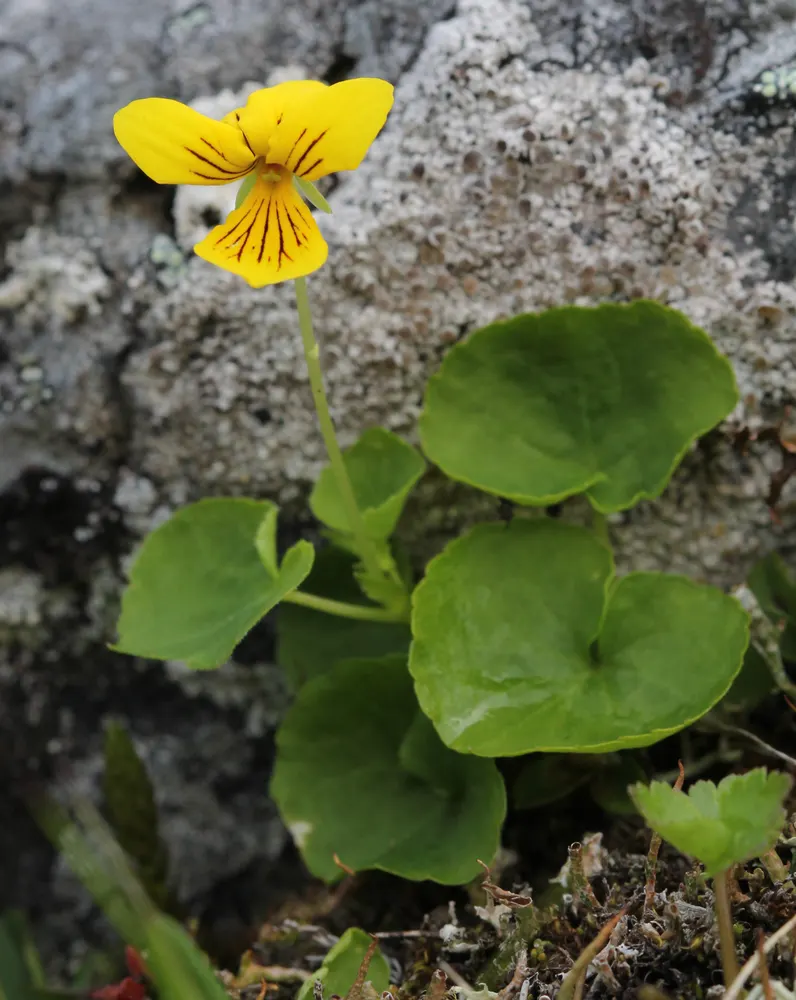
Photo: Alinja, CC BY-SA 3.0 (via Wikimedia Commons)
Yellow Wood Violet
Viola biflora
Also known as Twoflower Violet, Alpine Yellow Violet, Yellow Wood-Violet
Key benefits
✦Traditional uses
✦Wherever it grows, from the Alps to the Himalaya, this small golden violet has long been treated as a friendly, unassuming healer, gathered by hand in the short window between snowmelt and summer. In traditional Chinese and Tibetan herbal practice, related heat-clearing violets like Viola biflora were valued for soothing irritated throats and calming inflamed or troubled skin, often applied as a poultice or taken as a mild infusion. European folk tradition treated violets more generally as a gentle, cooling plant, good for a scratchy throat or a fretful child, and safe enough that grandmothers let little ones nibble the flowers straight from the meadow. Its cheerful yellow face, so different from its purple cousins, made it easy to spot and easy to love on high mountain walks.
How to grow & use it
✦The full apothecary for Yellow Wood Violet
Traditional remedies and step-by-step preparations, a complete growing guide, and how to harvest, dry, and store it, all unlocked with HerbLens Unlimited.
- ✦Remedies & preparations
- ✦ Growing guide
- ✦Harvest & storage
From under $6 a month. Free plant identifications always included.
- ✦Chamomile
- ✦Mullein
- ✦Calendula
- ✦Sweet violet (Viola odorata)
- ✦Heartsease (Viola tricolor)
“For the quiet gold flower that appears at the edge of the melting snow, small, bright, and easily missed.”
Unlike most violets, which wear purple or blue, Viola biflora blooms a clear buttercup yellow, a rare enough trait in the violet family that early alpine botanists sometimes mistook it for a small wild pansy at first glance.
Yellow wood violet isn't known to be toxic and has a long history of gentle use, though wild ones should be correctly identified and picked away from roadsides or sprayed areas.