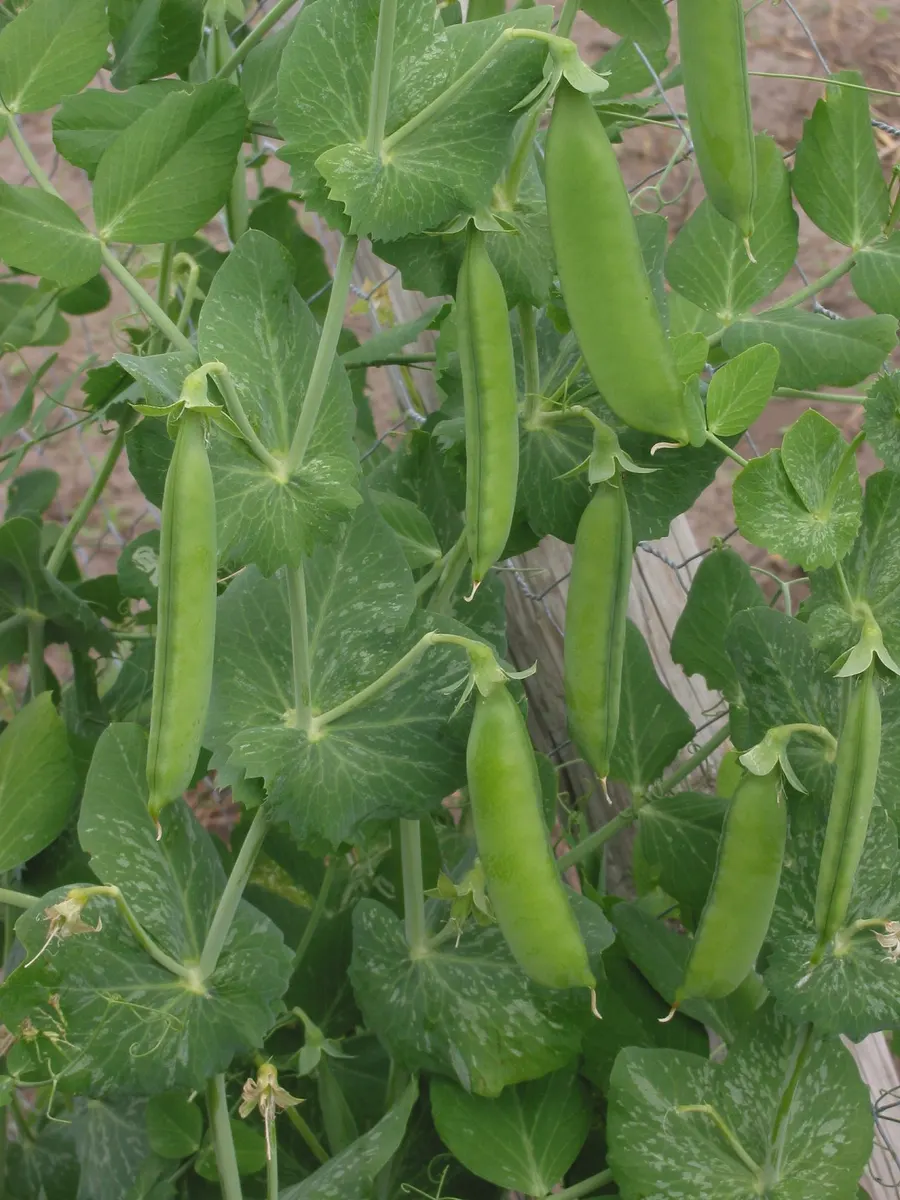
Photo: Rasbak, CC BY-SA 3.0 (via Wikimedia Commons)
Pea
Pisum sativum
Also known as Garden Pea, Green Pea, English Pea, Field Pea
Key benefits
✦Traditional uses
✦The pea is one of humanity's oldest companions in the garden, with charred remains found at Neolithic sites in the Near East dating back some ten thousand years. Long before it was a supermarket staple, dried peas were a winter staple across Europe and Asia, ground into flour or simmered into thick, warming pottages that carried families through the cold months. In old European folk practice, a tea made from the discarded pods, rather than the peas themselves, was traditionally sipped to help move fluid through the body and ease the swelling of tired, aching joints. Herbalists and grandmothers alike also reached for simple pea broth as a gentle, easy-to-digest food for the sick and the recovering, believing it restored strength without taxing the stomach.
How to grow & use it
✦The full apothecary for Pea
Traditional remedies and step-by-step preparations, a complete growing guide, and how to harvest, dry, and store it, all unlocked with HerbLens Unlimited.
- ✦Remedies & preparations
- ✦ Growing guide
- ✦Harvest & storage
From under $6 a month. Free plant identifications always included.
- ✦Mint
- ✦Parsley
- ✦Lemon Balm
- ✦Lentils
- ✦Chickpeas
“When you want a humble, honest food that has quietly fed and comforted families for ten thousand years.”
The humble pea changed the course of science: it was Gregor Mendel's careful cross-breeding of garden pea plants in a monastery courtyard in the 1850s and 1860s that revealed the basic laws of heredity, laying the foundation for modern genetics.
Peas are a safe, everyday food once cooked (raw dried peas are hard to digest). Those with gout may want to watch intake due to moderate purine levels, and pea protein can be an allergen for some people.