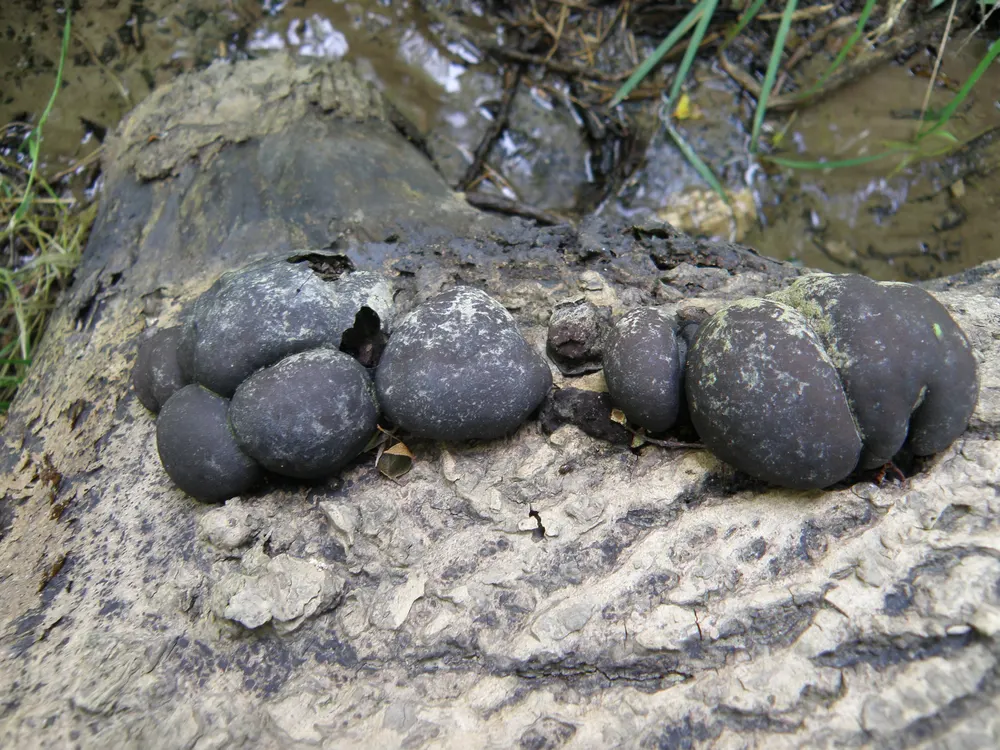
Photo: J Milburn, CC BY-SA 3.0 (via Wikimedia Commons)
King Alfred's Cakes
Daldinia concentrica
Also known as Cramp Balls, Coal Fungus, Carbon Balls, Tinder Fungus
Key benefits
✦Traditional uses
✦Long before matches, woodland travelers and fire-keepers sought out these hard, charcoal-like lumps clinging to fallen ash branches. Once dried and struck with a spark, the fungus's fibrous inner flesh catches easily and holds a slow, glowing ember, which made it one of the most trusted tinders in the hedgerows of Britain and Europe. In some rural traditions, people also carried a piece of the dried fungus in a pocket as a folk charm believed to ward off muscle cramps, which is how it earned the homely name Cramp Balls. It has never held a real place in the kitchen or the herbal dispensary, but as a piece of practical woodcraft, its reputation is old and well earned.
How to grow & use it
✦The full apothecary for King Alfred's Cakes
Traditional remedies and step-by-step preparations, a complete growing guide, and how to harvest, dry, and store it, all unlocked with HerbLens Unlimited.
- ✦Remedies & preparations
- ✦ Growing guide
- ✦Harvest & storage
From under $6 a month. Free plant identifications always included.
- ✦Flint and steel
- ✦Dry birch bark
- ✦Char cloth
- ✦True Tinder Fungus (Fomes fomentarius)
- ✦Birch Polypore (Fomitopsis betulina)
“For the moment you spot blackened, cracked lumps clinging to a fallen ash branch, and the woods quietly offer you a way to carry fire home.”
The name King Alfred's Cakes comes from the old legend of King Alfred the Great, who, hiding from Danish invaders in a peasant's cottage, was asked to watch some cakes baking by the fire and let them burn. This blackened, lumpy fungus was thought to resemble those scorched cakes, and the name stuck.
This tough, woody fungus has no history of safe food or medicinal use and should not be eaten or brewed. It is not known to be seriously toxic, but that does not make it safe to ingest, and correct identification matters since similar-looking deadwood fungi can be confused by an untrained eye.