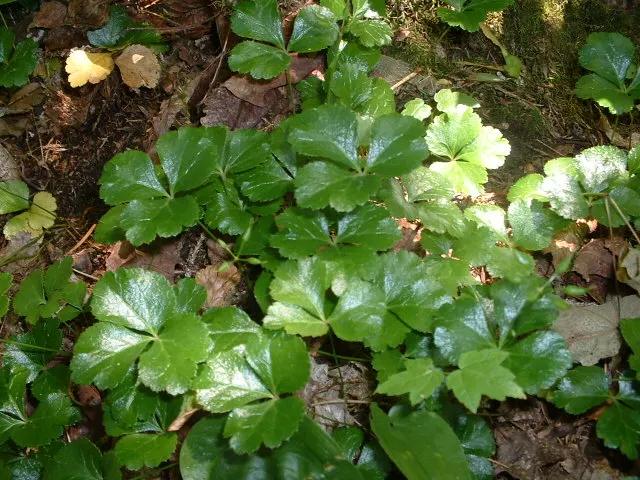
Photo: Fungus Guy, Public domain (via Wikimedia Commons)
Goldthread
Coptis trifolia
Also known as Goldthread, Canker Root, Mouth Root, Three-leaf Goldthread, Vine Snakeroot
Key benefits
✦Traditional uses
✦Goldthread takes its name from the slender, brilliant orange-gold roots that thread just beneath the moss of the northern forest floor, and those roots have been chewed and steeped for generations to soothe a sore mouth. Many Northeastern and Canadian Indigenous nations, including Iroquois and Algonquian peoples, relied on goldthread root as a remedy for canker sores, teething discomfort, and sore throats, chewing a small piece or rinsing with a steeped tea. Colonial settlers adopted the plant quickly, prizing its intense bitterness as a stomach tonic and its color as a natural dye, and the common name canker root has followed it ever since. Though it never became as famous as its cousin goldenseal, goldthread has quietly held its place in home apothecaries for its mouth-soothing reputation.
How to grow & use it
✦The full apothecary for Goldthread
Traditional remedies and step-by-step preparations, a complete growing guide, and how to harvest, dry, and store it, all unlocked with HerbLens Unlimited.
- ✦Remedies & preparations
- ✦ Growing guide
- ✦Harvest & storage
From under $6 a month. Free plant identifications always included.
- ✦Goldenseal
- ✦Sage
- ✦Chamomile
- ✦Goldenseal
- ✦Oregon grape root
“For the tiny woodland thread of gold that has soothed sore mouths since long before dentistry existed.”
Colonial New Englanders prized goldthread's brilliant orange-gold root so highly as a bitter and a dye that dried bundles were said to fetch prices rivaling gold by weight when traded to England, a small forest plant briefly worth its name.
Goldthread root contains berberine and should be avoided during pregnancy, breastfeeding, and by infants and young children. Berberine is processed by the liver and can interact with certain medications.