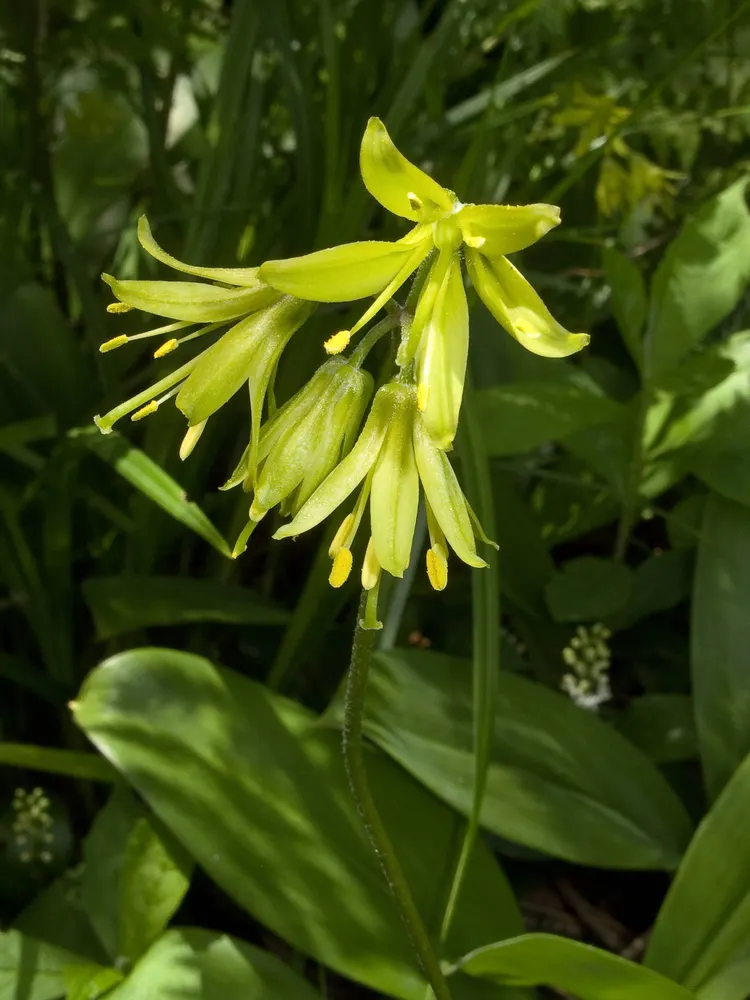
Photo: Peter coxhead, CC BY-SA 4.0 (via Wikimedia Commons)
Bluebead Lily
Clintonia borealis
Also known as Corn Lily, Cow Tongue, Straw Lily, Dogberry, Snakeberry
Key benefits
✦Traditional uses
✦Long before it had a Latin name, Bluebead Lily was a familiar sight to the Indigenous peoples of the northern forests, who came to know its two glossy leaves as a sign of rich, undisturbed woodland soil. Among some Algonquian and Iroquoian communities, the leaves were traditionally prepared as a wash or poultice and applied to burns, wounds, and irritated skin, a use recorded by ethnobotanists working with elders who still carried this forest knowledge. The plant never became a kitchen or medicine chest staple the way many of its woodland neighbors did, and much of what is known about it survives as fragments of oral tradition rather than settled practice. Its true fame, then as now, rests less on any cure and more on the startling, china blue berries it offers up each late summer, a color so rare in the northern woods that early botanists and foragers alike gave the plant its common name on sight.
How to grow & use it
✦The full apothecary for Bluebead Lily
Traditional remedies and step-by-step preparations, a complete growing guide, and how to harvest, dry, and store it, all unlocked with HerbLens Unlimited.
- ✦Remedies & preparations
- ✦ Growing guide
- ✦Harvest & storage
From under $6 a month. Free plant identifications always included.
- ✦Wild ginger
- ✦Canada mayflower
- ✦Trout lily
“For the hushed, mossy corners of the forest floor where a single, impossibly blue berry marks the turning of summer.”
True blue is one of the rarest colors in the plant world, and the berries of Clintonia borealis, ripening to a bright, waxy cobalt each August, are one of the very few truly blue fruits found in eastern North American forests, which is exactly how the plant earned its common name.
The berries of Clintonia borealis are considered inedible and can cause nausea if eaten, and no part of the plant has established safety for internal use. It can also be confused with other woodland plants, so correct identification is essential before handling it.